
Log-in here if you’re already a subscriber
This report is now available to all readers given the evolving nature of the conflict with Iran. Please subscribe to gain full access to all of our scoops, in-depth reporting and industry analysis.
It is still early days of a conflict with Iran that President Donald Trump said could last “weeks,” and which may have profound consequences for the Middle East and beyond. From 1979 until last year, the U.S. avoided direct confrontation with the Islamic Republic, and the current turmoil has caused immediate collateral damage for businesses that rely on peace.
At least for the immediate term, global civil aviation loses another huge swath of sky through which it can safely transit, this one including a critical juncture that connects the planet.
Related: Resurgent U.S. mercantilism upsets an aviation system engineered for globalization
Israel and the U.S. launched daytime strikes on thousands of Iranian targets beginning on Feb. 28, a move designed to destabilize the Islamic Republic’s government in the name of limiting its nuclear capability and the power of its proxies throughout the region.
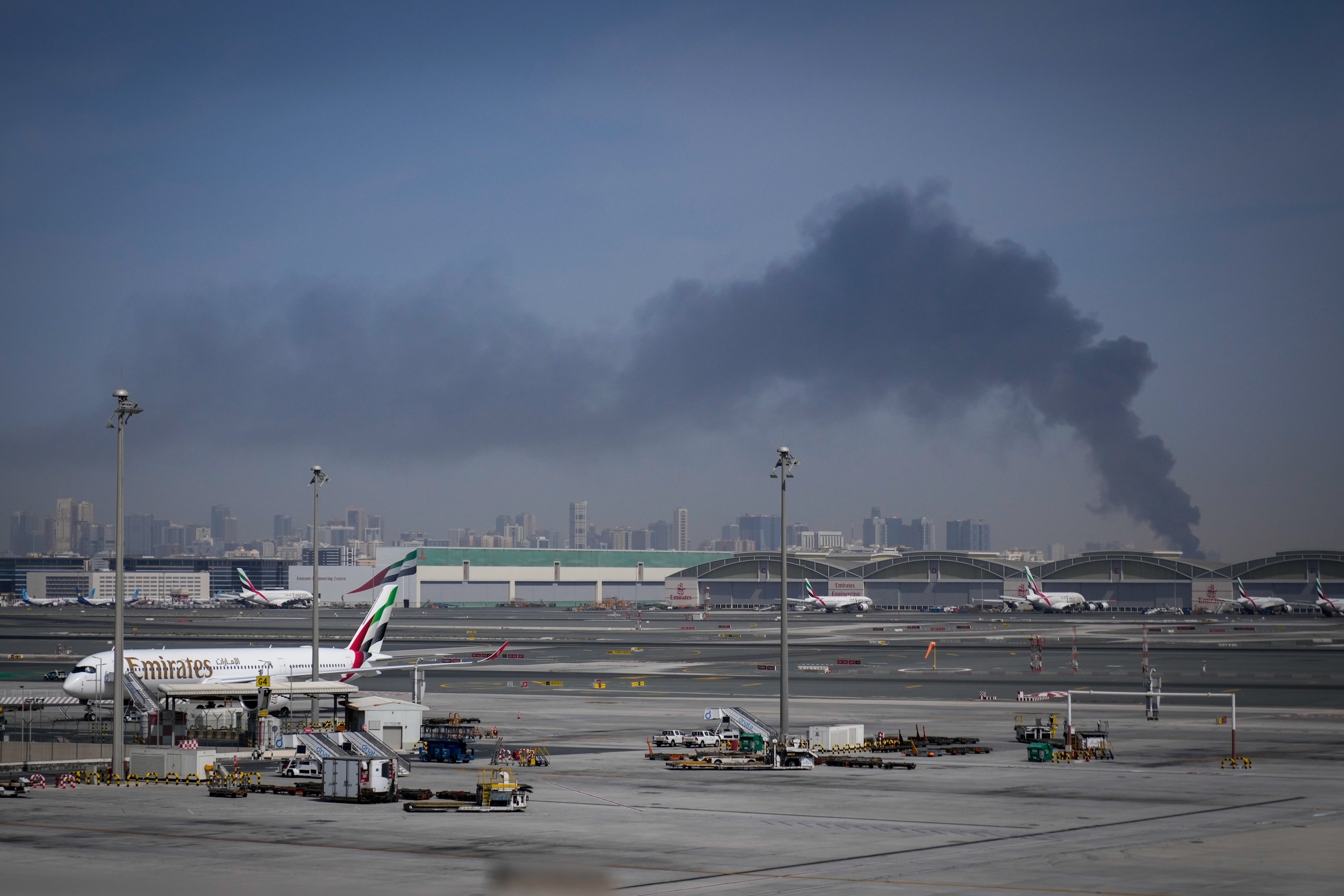
Iranian ballistic missiles and drones impacted or were intercepted in nations including Bahrain, Cyprus, Iraq, Israel, Jordan, Oman, Qatar, Saudi Arabia and the United Arab Emirates, a startling jolt across the region and for the aspiring future capitals of global aviation which sit at the edge of a regional neighborhood that could charitably be called complicated.
Until now, these superhub airports were on the edge — not in the middle — of conflict, something their creators built into their pitch to the world: stability, safety and prosperity. Airports in Dubai and Doha were closed after the attacks, stranding tens of thousands of passengers across the globe. Their respective home carriers, Emirates, FlyDubai and Qatar Airways, together represent 6.1% of global scheduled capacity in the month of March — a figure heavily fueled by long-distance widebody flying.
The Indian aviation regulator, DGCA, barred its airlines from flying over 11 countries in the Middle East until at least March 2, a massive loss of global connectivity for its own rapidly rising economy. Combined, flights to and from those nations — Iraq, Iran, Israel, Lebanon, Kuwait, Bahrain, Saudi Arabia, Qatar, Oman, UAE and Jordan — make up a staggering 13.2% of scheduled flying capacity globally in March, according to Cirium’s Diio. Not all flights to those countries are affected by the conflict, but the sheer volume of air traffic capacity flowing through the region underscores how central it has become for human transportation and the global economy.
In Israel, Tel Aviv’s Ben Gurion International Airport is closed and hosting U.S. military aircraft directly involved in the fight, leading El Al and Arkia to dispatch most of their aircraft away from the conflict to destinations in Europe on Saturday afternoon.
Related: How the war in Ukraine transformed Finnair
Geopolitical upheaval has repeatedly dropped boulders into the rushing torrent of global air travel. The flow diverts, often turbulently, around inaccessible airspace, as has been seen over the last few years in the skies covering Ukraine, Russia and Venezuela. Whether necessary to protect civilian air traffic overhead or wielded as a geopolitical cudgel, airspace restrictions are a hallmark of our contemporary aviation era.
Those restrictions took center stage in 2014 when Malaysia Airlines Flight 17 was shot down over eastern Ukraine by a Russian Buk surface-to-air missile. The tragedy created an overdue recognition of the impact an active conflict on the ground can have on the airspace above it.
In 2022, Russia was severed from much of the global aviation system following its full-scale invasion of Ukraine four years ago last week. The country responded in kind, barring U.S., European and other allied nations’ airlines from Russian airspace — adding hours to flights circumventing its territory, forcing cancellation of routes that were no longer viable and prompting intense lobbying by American carriers who found themselves at a sudden disadvantage to foreign airlines.
Related: Disconnecting Russia from aviation’s world order came gradually – then all at once
That remains the most famous example, but not the only fight over airspace in recent years. From 2017 to 2021, Qatar Airways was denied access to airspace in UAE, Saudi Arabia, Bahrain and Egypt during a protracted diplomatic row over Qatar’s relationship with Iran. And the ongoing fight with Iran is not the only new conflict in the region. In the hours that preceded the start of U.S. and Israeli operations, Pakistan and Afghanistan declared themselves in “open war” with one another along their 1,600-mile shared border.
The desert comes for the oasis
The Middle East has cemented itself over the last two decades as a strategic and economic powerhouse, its states having forged long-term goals to diversify beyond their oil economies. More than a quarter of Dubai’s GDP is attributable to its aviation sector, forecast to grow to nearly a third by 2030.
Dubai and Doha alike were deliberately designed as an oasis from the upheavals ranging nearby. Both remain a direct pipeline to Russian destinations and a way for Russian citizens to reach other points that its airlines have been barred from accessing after its invasion of Ukraine. Those sanctions remain in place today.
November’s Dubai Air Show, the showcase for the emirate’s ascent, produced at least one clear takeaway: The UAE’s ambition to be the world capital of aviation is unrelenting in the face of Gulf wars in 1991 and 2003 and economic disruptions. That “bloody” COVID-19 pandemic, in the words of Sir Tim Clark — president of Emirates and keeper of a long-term view — was a brief interruption to its otherwise unceasing objective built over four decades.
Related: Emirates’ Tim Clark has the audacity to think long-term
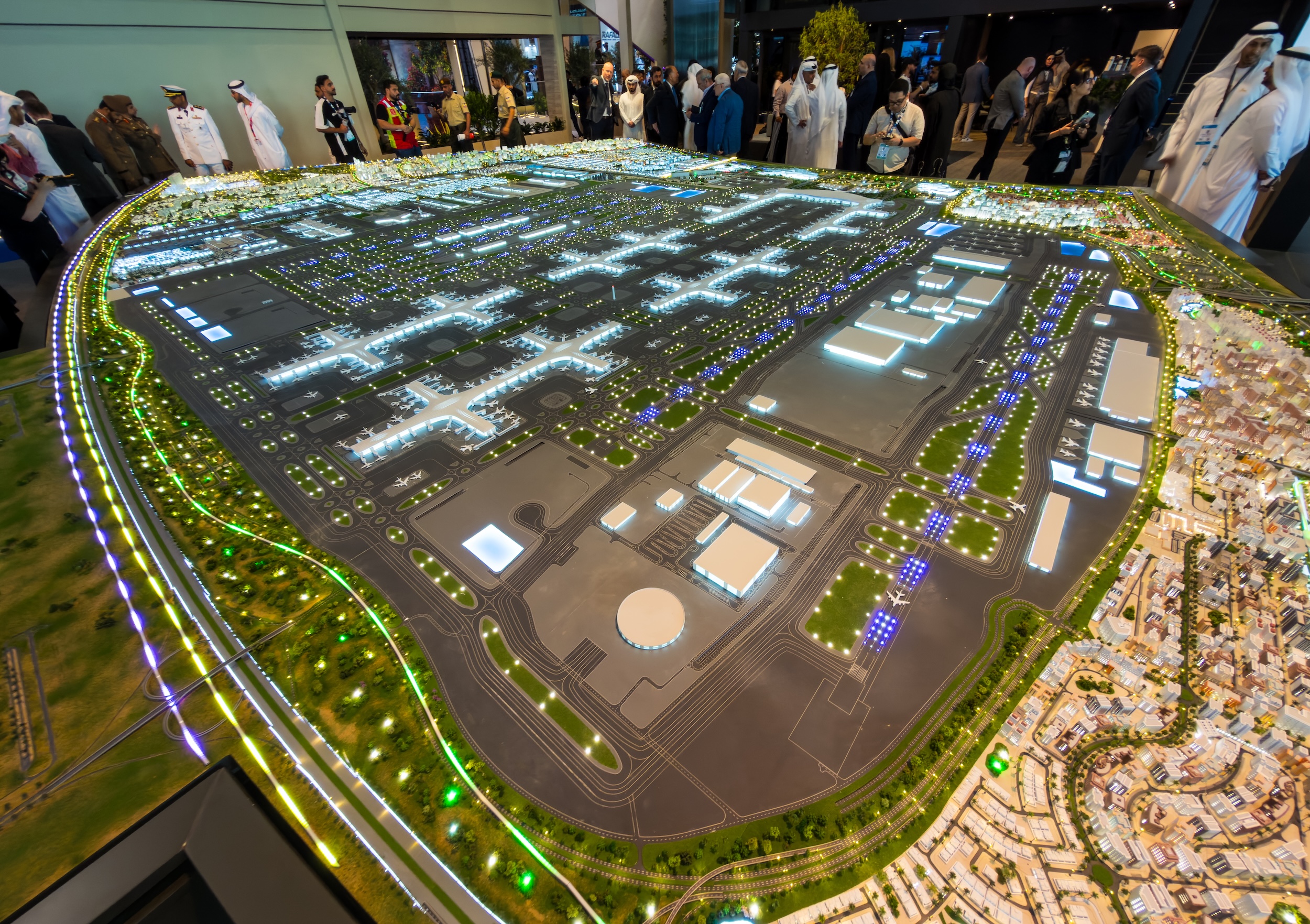
The Dubai World Central Airport is the crown jewel. A sprawling miniature model of the airport’s planned expansions was on display at the biennial gathering, complete with its five parallel runways, a capacity of 250 million passengers per annum (2.5 times larger than Dubai International) and a surrounding aerotropolis of logistics hubs and other aviation businesses. The display underscored the UAE’s continuing vision to become aviation’s world capital, as did daily flight demonstrations by electric vertical take-off and landing developer Joby Aviation, which now plans to launch its commercial air taxi service in Dubai rather than the U.S.
“We have to live up to the ambitions that the government has placed, and we have to make it happen,” FlyDubai CEO Ghaith Al Ghaith said in a November interview with The Air Current at the air show. “Nobody else can except your organic airlines, us and Emirates.”
Dubai’s neighbors have followed suit, with capitals across the region including Doha, Istanbul, down-the-street Abu Dhabi and most recently Riyadh placing a premium on their aviation industries as a vehicle for both economic and social advancement. Crown Prince Mohammed bin Salman unfurled an aviation-centric liberalization of the Kingdom of Saudi Arabia’s economy and society. Its nascent Riyadh Air is expected to fly its first commercial flights this year. The airspace to the north of the Saudi capital also closed on Saturday after fighting commenced.
There are, at the moment, far more questions than answers as the situation in the Middle East changes minute by minute, with second-order effects only just starting to emerge. Most notably uncertain are the duration of the conflict and which countries in the region and beyond — many hosting U.S. bases and other assets — get directly involved in the fighting. It is also unclear what impact non-state actors may have in the region in the months and years to come, with the advent of small armed drones greatly increasing their potential to upset civil aviation.
Related: Special Report: Lessons from Ukraine’s Drone Industry
Shipping of goods through the Suez Canal into the Gulf is deeply disrupted, with at least three ships traversing the Strait of Hormuz hit by unidentified projectiles according to the UK Maritime Trade Office. Logistics giants CMA CGM, Maersk, Hapag-Lloyd and Japan’s Mitsui OSK Lines have halted passage of their vessels through the Gulf, with some opting for the lengthy rerouting around Africa’s southern Cape of Good Hope.
The extreme risk in the Gulf and Strait of Hormuz is also causing insurers to cancel policies for ships and to raise prices, according to the Financial Times. That may result in a shift of goods to air freighters and passenger aircraft bellies as shippers seek certainty of delivery, as they did when Houthi rebel attacks were frequent on the Red Sea and the Gulf of Aden in 2024.
The impact on global oil prices, and in turn jet fuel, was already being felt on Sunday when commodity trading markets reopened, sending the price of Brent oil up sharply between 8% and 12%. Prices were already rising in recent weeks alongside the build-up of U.S. forces in the region in what has become the largest deployment of air power since Operation Iraqi Freedom in 2003. Iran has moved to restrict commercial shipping in the Strait of Hormuz, through which 20% of the world’s oil transits. Iranian drones attacked at least one tanker, threatening to cut off the strategic waterway for Asia’s energy.
Iran’s Khargh Island was reportedly part of the initial wave of U.S. and Israeli strikes. The patch of land is the country’s central oil terminal, 90% of which flows to China. Iran is responsible for an estimated 12% of the exported (and sanctioned) oil that was shipped to China last year, according to the Center on Global Energy Policy at Columbia University, which notes that China has been stockpiling historically cheap oil over the past year. The estimated output made Iran China’s third largest source of crude after Russia and Saudi Arabia.
In the case of the pandemic, demand evaporated with global travel restrictions. The aviation system remained open. In this conflict, it’s the disappearance of supply with airspace closures designed to protect civil air traffic as missiles and drones wreak havoc on military and civilian targets — including international airports in Dubai, Bahrain and Baghdad.
History has shown that as long as that supply is the pinch point in question, airlines have generally been able to continue to thrive. Whether the current conflict will also impact demand remains to be seen. A top Middle East airline leader told TAC hours after the conflict began that even a brief fight across the region would weigh heavily on travel to the region and “will hurt [Dubai’s] reputation as a destination in itself.” Though the broader optimism that built the region’s grand objectives still pervades, said the executive: “This too shall pass.”
Elan Head, Will Guisbond, Carter Johnston, Brian Garrett-Glaser and Howard Slutsken contributed to this article.
Write to Jon Ostrower at jon@theaircurrent.com
Subscribe to The Air Current
Our award-winning aerospace reporting combines the highest standards of journalism with the level of technical detail and rigor expected by a sophisticated industry audience.
- Exclusive reporting and analysis on the strategy and technology of flying
- Full access to our archive of industry intelligence
- We respect your time; everything we publish earns your attention