

Log-in here if you’re already a subscriber
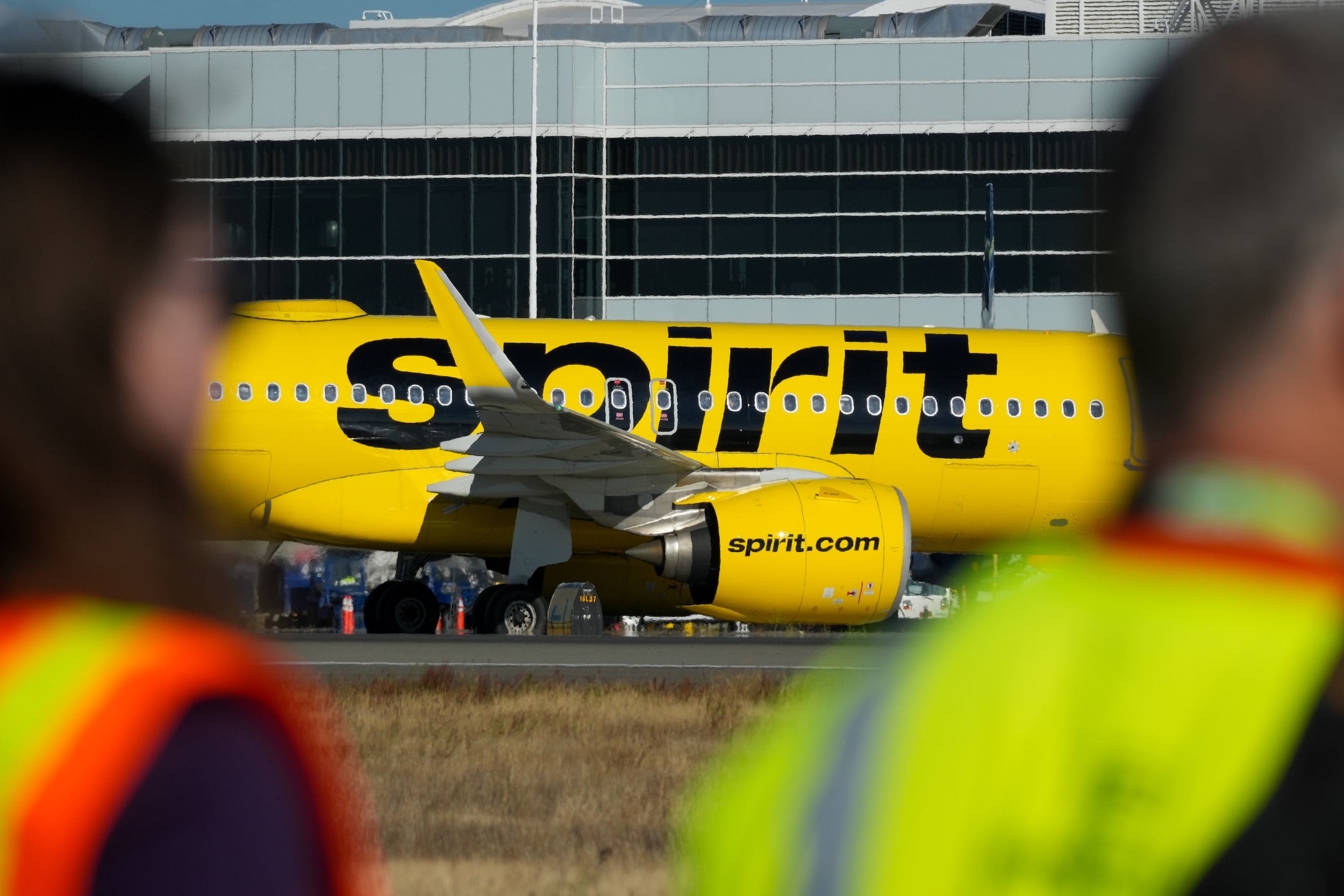
U.S. competitors to Spirit Airlines are closely watching a Dec. 13 bankruptcy milestone for the ultra-low cost carrier that executives at multiple U.S. airlines say risks triggering an abrupt shutdown of its operations.
At least two major U.S. airlines are planning for a possible demise of the struggling low-cost carrier as early as Saturday, The Air Current is told. Each is accelerating plans to provide a schedule to backfill what would be Spirit’s cancelled flights along with rescue fares for Spirit customers who would be stranded by an abrupt end to its flying heading into one of the busiest travel periods of the year.
Senior executives at other U.S. airlines whose operations have less direct intersection with Spirit’s or whose fleets are too small to maneuver if it collapses, are also watching the Saturday milestone and see it as unlikely Spirit will receive the necessary capital injection. The airline has 428 flights scheduled on Dec. 13 and another 3,138 through Dec. 20, according to Cirium’s Diio.
“There is no truth to any rumors that we are preparing to cease operations. It is business as usual at Spirit and flights continue to operate normally,” a Spirit spokeswoman said in an emailed statement to TAC. “We are working closely with our debtor-in-possession (“DIP”) providers and other key stakeholders on a wide variety of issues to support the financial needs and future of the business, as we have been throughout our restructuring process. These ongoing discussions remain productive.”
At issue is whether or not Spirit will be allowed a third draw, of an additional $100 million, from the $475 million DIP financing pool available to the airline as it continues its second attempt at restructuring operations.
As part of its bankruptcy plan, the term sheet approved by the court stipulates that Spirit must provide its DIP lenders with either “an indication of interest in respect of a sale transaction” — a letter of intent for a potential merger or acquisition — “or standalone plan of reorganization, in each case acceptable to the required DIP lenders in their sole discretion.”
The DIP lenders, which include a group of senior secured bondholders, must determine whether Spirit has met their conditions of either an “acceptable” strategic transaction or plan of reorganization for it to receive $100 million on Saturday. The capital is desperately needed as the airline’s latest financial disclosure for October showed an average loss of $3.1 million a day on operations alone.
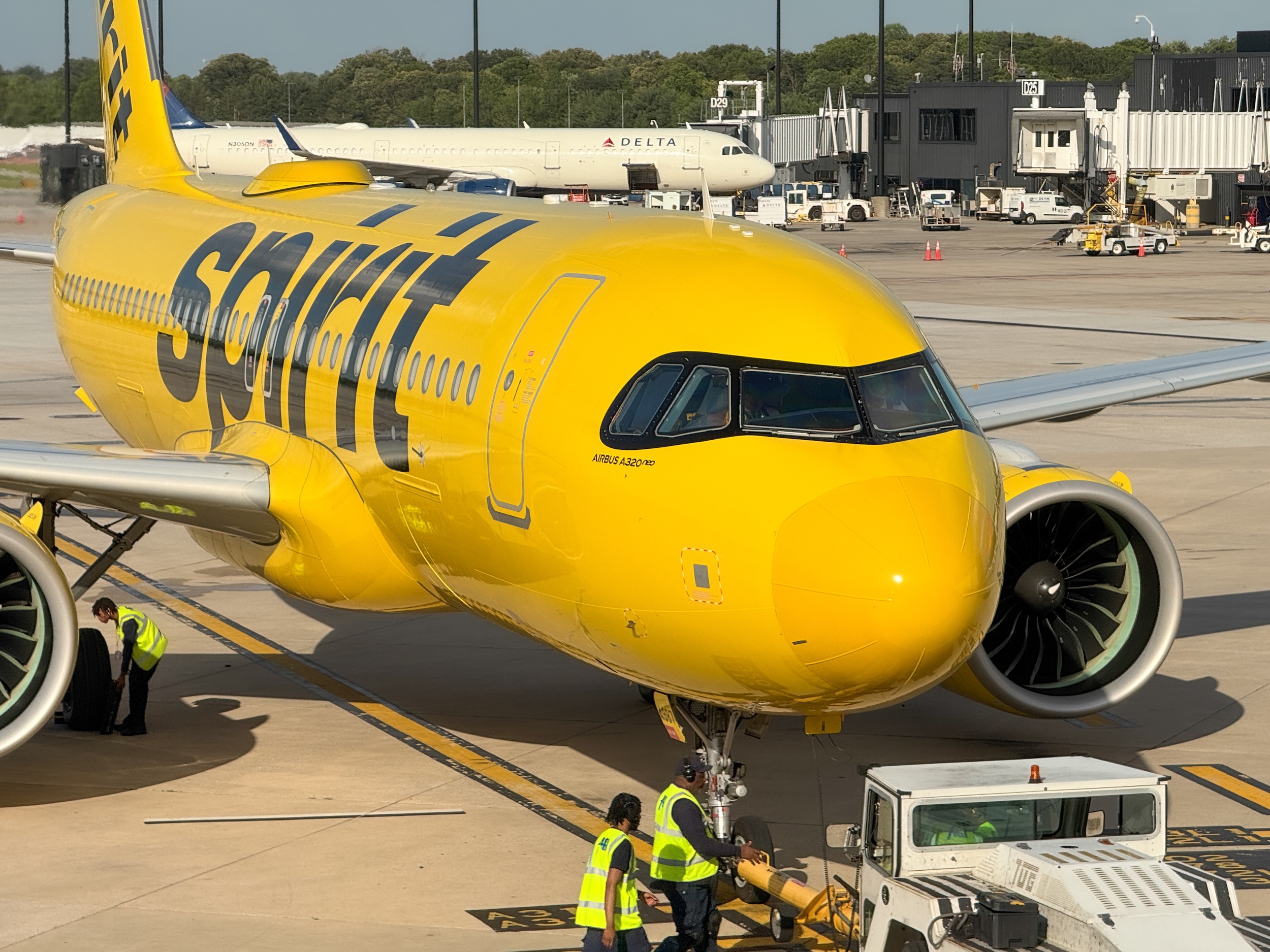
Spirit filed with the U.S. Securities & Exchange Commission on Oct. 14 the broad strokes of a transformation plan. While light on specifics, it outlined $1.49 billion in potential opportunity by cutting unprofitable routes and focusing on core markets; significantly shrinking its fleet and eliminating up to $3 billion in debt and lease obligations; improving distribution and revenue opportunities; and slashing labor, airport and other costs. Spirit also disclosed that it was “actively engaged in discussions with a number of interested counterparties” on a potential merger or sale.
Spirit has not filed either a standalone or merger reorganization plan with the court in the nearly two months since the transformation plan was released.
There has not been a collapse of a major airline in the United States since Independence Air ceased operations on Jan. 5, 2006. The regional feeder turned independent carrier had filed for Chapter 11 bankruptcy about two months prior.
Though there is not a unanimous view on Spirit’s prospects heading into the Dec. 13 milestone, C-level executives and senior leaders across seven U.S. carriers with whom TAC spoke signaled a general level of pessimism about Spirit’s ability to continue as a standalone carrier. They all agreed that Spirit will likely end its operations, but that could come as early as Saturday if Spirit fails to obtain the DIP allocation or as late as immediately after the holiday season when it has its last big opportunity for revenue — a pattern not unlike that of Independence Air in 2006.
U.S. bankruptcy law makes it extremely difficult for an airline to fail outright. The numerous vested interests in its survival, from investors to suppliers and labor, all stand to benefit from keeping the carrier afloat. Wall Street and industry sources told TAC that Spirit faces a genuine liquidation risk as many of those interests may be aligned in believing the airline’s assets are more valuable than the airline in operation.
Related: Half a billion dollars later, JetBlue-Spirit is over and its competitors stronger
Spirit’s competitors, most notably Frontier Airlines and JetBlue Airways, have much to gain from its demise, including its available fleet of A320ceo aircraft and its presence in Fort Lauderdale, Florida. United Airlines CEO Scott Kirby has enthusiastically predicted the carrier’s demise. Frontier and JetBlue in 2022 went through a protracted bidding war for Spirit, which ended in a short-lived merger agreement with JetBlue that was later successfully blocked by the Justice Department in January 2024 over anti-trust concerns with Spirit’s departure from the market. United and JetBlue in October announced a deepening commercial partnership that will enable United’s access to John F. Kennedy International Airport.
Spirit filed for Chapter 11 bankruptcy on Aug. 29 after its largest lessor, AerCap, declared the airline in default on 37 aircraft leases and another 36 on order. The filing was Spirit’s second in less than a year after it failed to seriously address high post-pandemic costs during its first restructuring.
Fred Cromer, Spirit’s chief financial officer, in a declaration to the court on Aug. 31 promised to make “the broad changes necessary” to ensure a “sustainable future” for the airline by, essentially, shrinking the airline to profitability.

The airline is operating a significantly slimmed-down fleet in part due to a cutback in capacity and lack of available Pratt & Whitney geared turbofan engines for its A320neo family aircraft. Of its fleet of 214 aircraft, only 118 are active with 75% of its A320neos and 34% of its A321neos in storage, according to ch-aviation. Of its operational fleet, 74 are V2500-powered A320 and A321ceo aircraft.
To make those necessary changes, Spirit needed capital to work through the restructuring. The resulting DIP agreement from existing bond holders provided the airline with up to $475 million over four tranches, each based on the airline meeting certain milestones.
The first $200 million draw occurred on Oct. 14 after the court approved both the DIP agreement and a settlement with AerCap. That settlement included a one-time $150 million payment to Spirit from AerCap and the rejection of 27 aircraft leases. Spirit in turn dropped claims to 36 A320neo family aircraft Airbus is due to deliver to AerCap between 2027 and 2029.
The second $50 million DIP draw on Nov. 7 was dependent on Spirit reaching tentative agreements with at least one of its work groups. It reached deals with both the Air Line Pilots Association (ALPA) and Association of Flight Attendants (AFA) on that date, which unlocked access to the funds, according to regulatory filings. On Dec. 11, represented pilots and flight attendants approved both concessionary contracts with the airline that are intended to maintain the unions’ representation and prevent the company from abrogating the collective bargaining agreements.
Spirit this week also secured a deal with American Airlines to sell access to two gates at Chicago’s O’Hare International Airport for $30 million.
Write to Jon Ostrower at jon@theaircurrent.com and Edward Russell at ned@byerussell.com
Subscribe to continue reading...Subscribe to The Air Current
Our award-winning aerospace reporting combines the highest standards of journalism with the level of technical detail and rigor expected by a sophisticated industry audience.
- Exclusive reporting and analysis on the strategy and technology of flying
- Full access to our archive of industry intelligence
- We respect your time; everything we publish earns your attention