
Log-in here if you’re already a subscriber
Air safety reporting is made accessible without a subscription as a public service. Subscribe to The Air Current for full access to our scoops, in-depth reporting and industry analysis.
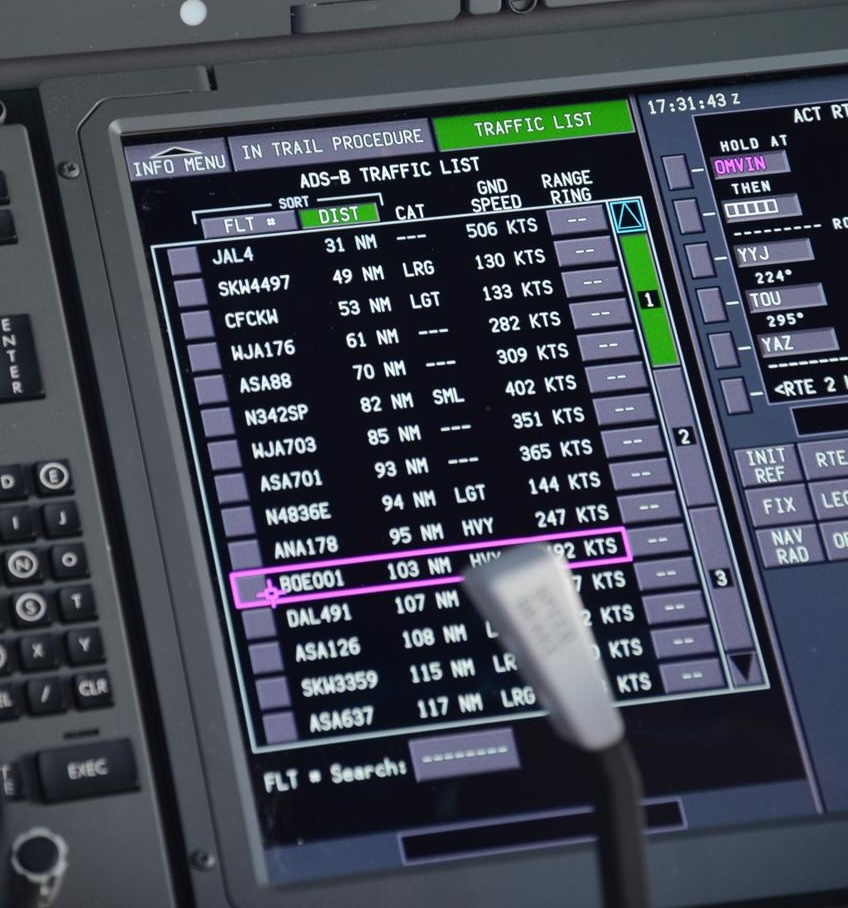
Fifteen years after the Federal Aviation Administration announced it would require aircraft operating in most U.S. airspace to be equipped with GPS-based Automatic Dependent Surveillance-Broadcast (ADS-B) “Out” technology, Congress appears poised to require those same aircraft have ADS-B “In,” which displays that information about nearby traffic in the cockpit.
Rotorcraft Operations Transparency and Oversight Reform (ROTOR) Act sponsors Republican Sen. Ted Cruz and Democrat Sen. Maria Cantwell say the effort will improve safety by enabling a host of in-cockpit traffic awareness tools. The legislation, which combines the Senators’ separate proposals unveiled this summer, would also set in motion the largest equipment mandate since 2010 for the U.S. commercial, general and business aviation fleets. Many new and existing aircraft types are today able to receive the update, but some, including the CRJ regional aircraft involved in the January 2025 accident near Washington, D.C. that prompted the legislation, are not.
Related: The FAA’s decades-long struggle to put a price on aviation safety
The ROTOR Act, which will be voted on by the Senate Commerce Committee on Oct. 21, is the first major proposed piece of legislation to specifically address safety issues identified in the aftermath of the D.C. crash, most notably the lack of ADS-B In functionality on the CRJ and the U.S. Army Black Hawk’s ability to fly in congested airspace without ADS-B Out enabled.
The newly-proposed legislation would require the FAA to issue a rule within two years mandating the installation and retrofit of ADS-B In technology for most civil and military aircraft by the end of 2031, with operators able to apply for a one year extension. Upon enactment, it would also immediately close what lawmakers call a “loophole”2 that allowed U.S. military helicopters to frequently operate with ADS-B Out turned off in congested airspace — including the Black Hawk involved in the D.C. midair collision.
The FAA began studying ADS-B technology late in the 1990s and in 2010 finalized a mandate of ADS-B Out applying to most aircraft, which went into effect in 2020. Citing underdeveloped performance standards and an inability to calculate expected cost, the agency did not move to do the same for ADS-B In — despite the U.S. National Transportation Safety Board having recommended it do so since 2008. Now, lawmakers and government officials believe the cost-benefit calculus has changed in the wake of the DCA crash and hope the momentum from that tragedy is enough to end the ADS-B journey over two decades in the making.
The ROTOR Act, unpacked
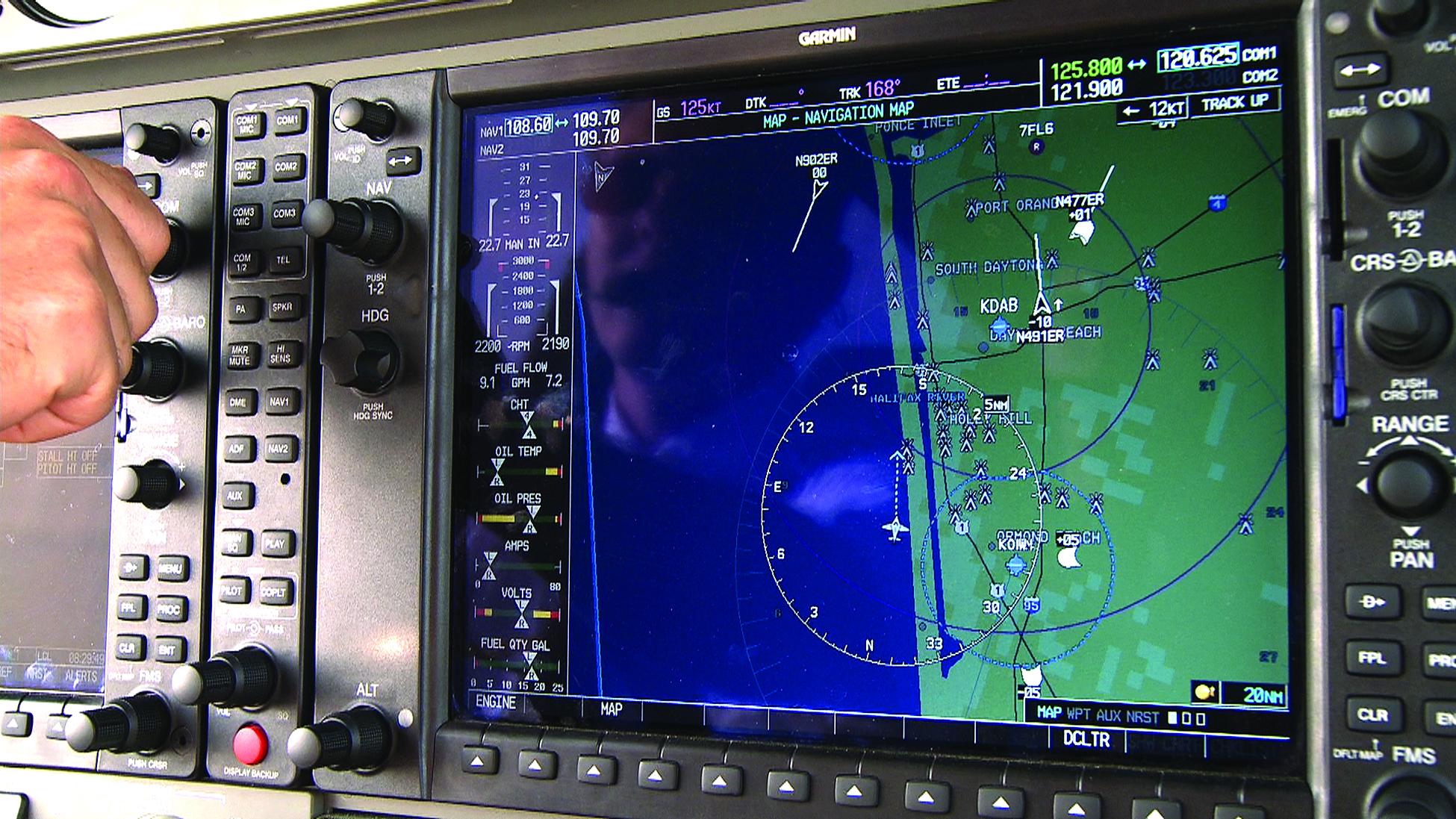
ADS-B systems can be composed of an “In” or an “Out” option, or include both. ADS-B “Out” technology broadcasts precise location, altitude and speed using an onboard transmitter, while “In” technology can process that information in the cockpit to display a live depiction of traffic (and often weather, too). ADS-B data is generally more reliable and precise than radar as it uses GPS signals to collect aircraft data rather than time-based radar pings that can be obstructed or unavailable at low altitudes.
Since 2020, civil aircraft have been required to utilize ADS-B Out when operating in most parts of U.S. airspace. Under the ROTOR Act, all places where aircraft are currently required to use ADS-B Out would also require the use of ADS-B In. The act would also create an aviation rulemaking committee to study the potential of mandating ADS-B throughout all forms of controlled airspace — such as small, towered Class D airports — where no form of the technology is currently required.
Military flights conducting “sensitive government missions” before the DCA crash were exempted from using ADS-B Out, an interpretation the Department of Defense had extended to training and evaluation flights as well as the transport of individuals below cabinet rank. The ROTOR Act would close that loophole and require special 14-day Congressional notification if the remaining limited exemptions are used more than five times per month. This would effectively codify into law emergency rules created by the FAA immediately after the January crash that require the use of ADS-B Out.
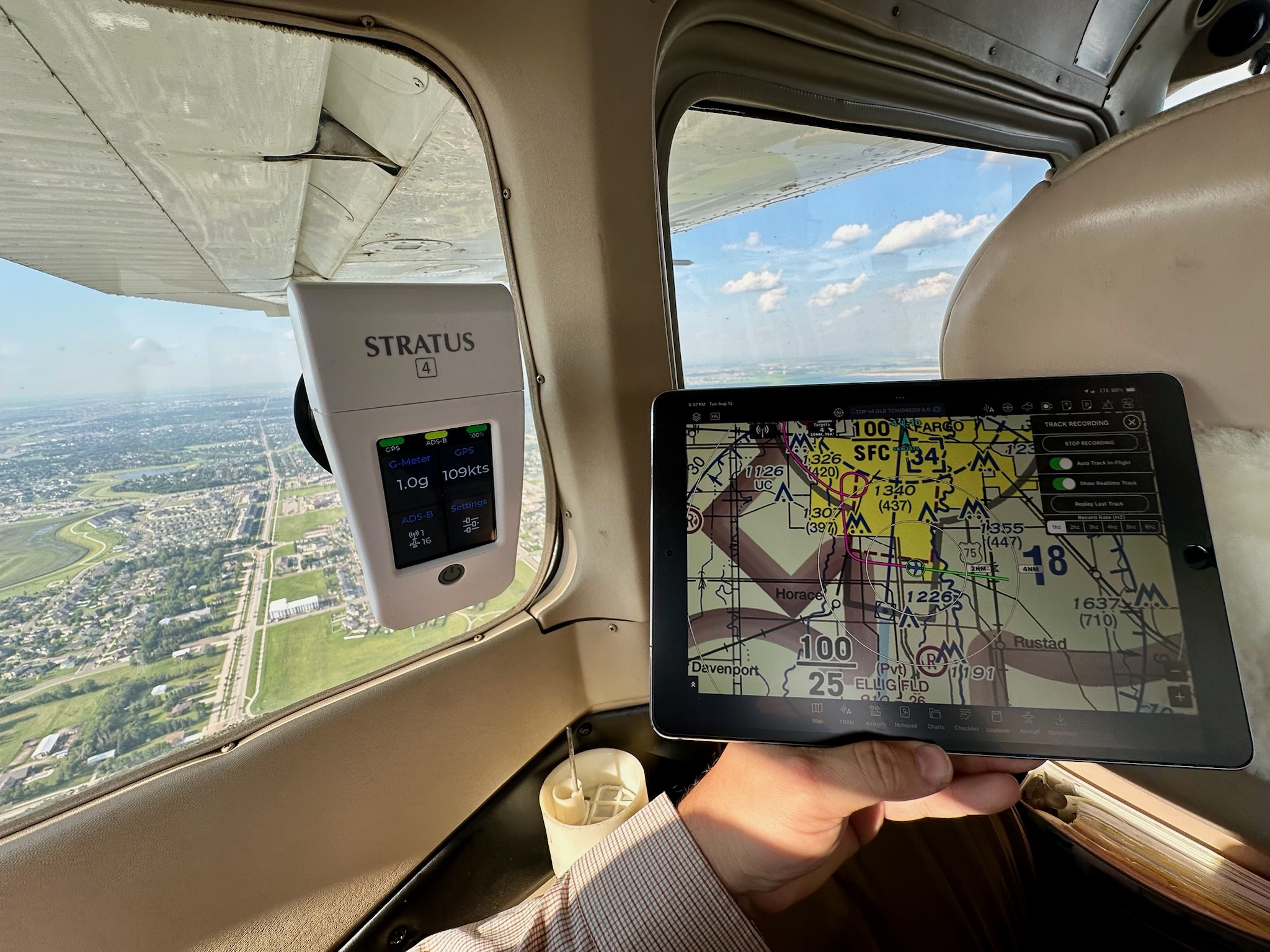
The ROTOR Act also recognizes that the general aviation industry has largely taken the lead on ADS-B In and Out equipment thanks to relatively inexpensive, portable commercial options that were created after the 2010 ADS-B Out final rule was published. The legislation would direct the FAA to consider the merits of these types of devices towards meeting the new requirements for aircraft under 12,500 lbs maximum takeoff weight when operating under 14 Code of Federal Regulations Part 91.
Beyond ADS-B equipage requirements, the ROTOR Act moves on several safety-related actions related to the DCA crash: the establishment of an office inside the FAA dedicated to coordinating with the DOD on helicopter movements; the creation of safety data sharing mechanisms between the DOD and FAA; the mandating of independent reviews of DCA airspace and airspace at most major U.S. airports; and a U.S. Army Inspector General audit of its aviation activities that the branch had previously rebuffed.
‘A serious and notorious safety issue’
In the FAA’s 2010 ADS-B out final rule, it acknowledged industry comments pointing out that “the majority of the ADS-B benefits will be derived from ADS-B In,” given that ADS-B Out-only systems primarily benefit the FAA by acting as a more reliable data source for air traffic control equipment.
The FAA has been able to use ADS-B Out to reduce separation between some aircraft in some situations, but the lack of widespread ADS-B In has prevented the broader adoption of cockpit alerting systems designed to prevent runway incursions, as well as heightened traffic and weather awareness for aircraft operating on the ground and in the air. Despite those limitations, the FAA in its 2007 draft rule said that ADS-B In was not “identified as a requirement for maintaining the safety and efficiency of NAS operations.”
The NTSB in its response to that draft rule said it “believes that this assessment is incorrect and that the equipage of aircraft with ADS-B In capability will provide an immediate and substantial contribution to safety, especially during operations in and around airports.” The Board further argued that “the FAA’s failure to expedite the adoption of full ADS-B capability (both ADS-B In and ADS-B Out) would be unfortunate and would result in missing or unnecessarily delaying an opportunity to remedy a serious and notorious safety issue.”
Related: American Airlines crash ends era of unprecedented U.S. airline safety
The FAA found that ADS-B In performance requirements were “not well defined” enough to conduct a legally required economic analysis, despite much of the industry urging the FAA to recognize the operational and safety enhancements it would bring. As budgetary overruns complicated the 10-year long ADS-B Out deployment, a 2014 Department of Transportation Inspector General report found costs had already exceeded benefits by $588 million. (The FAA at the time estimated the entire rollout through 2035 would cost $4.5 billion.)
Some operators and manufacturers have regardless opted to equip ADS-B In voluntarily, though it is not widespread. The problem is most acute for the country’s aging fleet of CRJ regional jets, which act as the backbone of U.S. air service to smaller communities. A spokesperson for MHI RJ, owner of the intellectual property and product support for the out-of-production CRJ said, “The CRJs are not certified for ADSB-in and we do not have the option developed.” Approximately 600 CRJ aircraft, including Challenger 850 business jets, are currently active in the U.S., according to ch-aviation.
Airbus told The Air Current that all new A320neo, A330neo and A350 jets are equipped with ADS-B In as a standard option and that retrofit “might” be offered for older A320 and A330 models. The A220 and the out-of-production A380 do not have ADS-B In, the company said. Boeing did not immediately respond to a request for comment in time for publication. Embraer told TAC that its E2, Praetor and Phenom airplanes “in production offer at least ADS-B In with AIRB (Basic Airborne) application/functionality” and retrofits for older models are available depending on installed avionics.
A spokesperson for Sikorsky, manufacturer of the UH-60 Black Hawk did not immediately comment in time for publication. The U.S. Army did not respond to a request for comment. American Airlines said it “stands in strong support” of the ROTOR Act.
Today, officials say the average cost of equipping ADS-B In has fallen enough to move forward with the legislation. Yet, potentially anticipating complaints of cost from industry, the bill would force the FAA to come to a conclusion “absent clear and compelling evidence to the contrary, that ADS-B In equipment is cost beneficial and improves aviation safety,” effectively negating the agency’s requirement to conduct benefit-cost analyses (BCA) on new rules.
As previously detailed by TAC, the FAA’s BCA requirement has stood in the way of more proactive safety enhancements on numerous occasions. The process can be overridden by Congress when it authors laws that will go into effect regardless of what the FAA determines is economically justifiable.
“Sometimes people are concerned about cost, and I don’t think we should be concerned about costs when it comes to safety,” Transportation Secretary Sean Duffy said at a press conference in July when the first version of the ROTOR Act was announced by Sen. Cruz. “We can drive safety way higher and also at a very affordable cost. That’s the benefit of the advancement of technology over the course of the last 22 years.”
Related: Trump upends decades-old global air safety investigatory norms
The bill appears to recognize that ADS-B, while a valuable situational awareness tool, is not intended to be a dedicated collision mitigation service. ADS-B does not provide action-oriented “resolution alerts” in addition to traffic advisories that the Traffic Collision Avoidance Systems (TCAS) found in many larger aircraft do. Additionally, the ROTOR Act would require the FAA to submit to Congress a “strategic roadmap” for the widespread adoption of higher fidelity TCAS systems like the Airborne Collision Avoidance System-X (ACAS-X) within 180 days of the bill being signed.
“There have been a number of midair collisions, a myriad of them, over a couple of decades, where we’ve continually issued this recommendation,” NTSB Chair Jennifer Homendy told TAC of ADS-B In on the sidelines of the ROTOR Act announcement on Capitol Hill in July. “I think where there’s a will, there’s a way. It’s clear that there’s a very bipartisan focus on getting this done and a concerted effort, and so I do think they’re going to get it done, and then DOT will have to implement the rule.”
“We continue to remind them that for us, life is priceless,” she said. “The benefits far outweighed the cost then, and they definitely do now.”
Subscribe to continue reading...Subscribe to The Air Current
Our award-winning aerospace reporting combines the highest standards of journalism with the level of technical detail and rigor expected by a sophisticated industry audience.
- Exclusive reporting and analysis on the strategy and technology of flying
- Full access to our archive of industry intelligence
- We respect your time; everything we publish earns your attention