

Log-in here if you’re already a subscriber
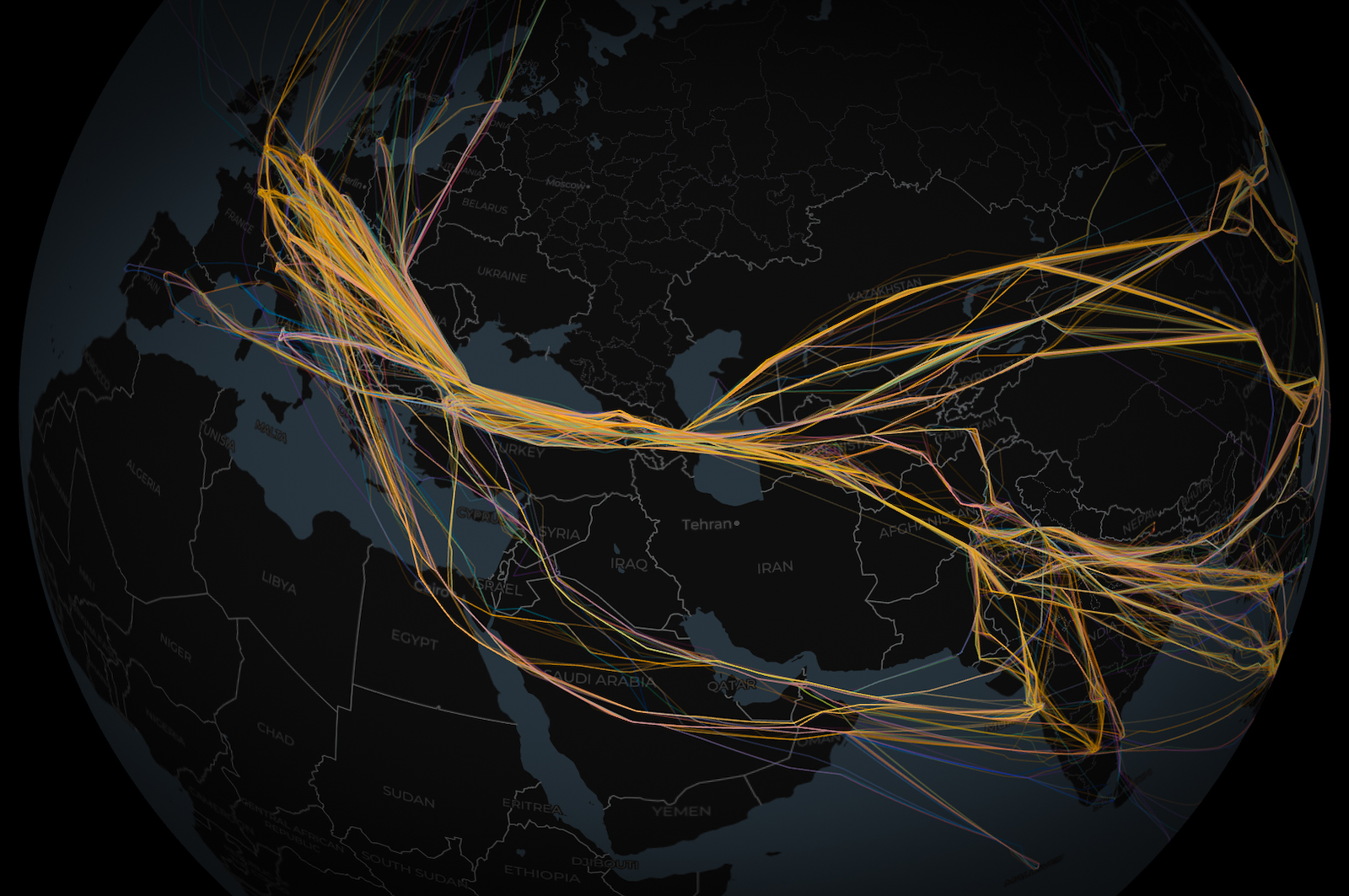
Repeated Houthi missile strikes on Riyadh International Airport are exacerbating a key vulnerability for global aviation as growing instability across Europe and the Middle East forces hundreds of daily transcontinental flights into one acutely vulnerable sliver of airspace just 85 nautical miles wide.
Warnings to airlines and travelers to stay clear of Saudi Arabian airspace followed a ramp in attacks by Houthi militias on the kingdom’s airports. An Oct. 11 barrage killed at least 13 people at Riyadh’s King Khalid Airport days after destroying a Saudia Airbus A320 parked at a gate. The Federal Aviation Administration urged U.S. airlines to avoid the Jeddah Flight Information region that covers the Kingdom of Saudi Arabia, warning of a “potentially hazardous situation” and citing “ongoing military activities” as well as Global Navigation Satellite System (GNSS) interference during overflight, arrival and departure.
That latest disruption follows more than a dozen years of progressively shrinking airspace essential for connecting Europe, Asia and Australia. Geopolitical instability raging across Northeast Africa, Eastern Europe and the Middle East continues to close off huge swaths of sky to commercial and cargo airliners, with no end in sight to the Ukraine-Russia conflict along with broader Russian airspace denial to North American, European, Australian and many Asian airlines.
Those expanding zones of conflict now force a large majority of traffic into a tiny corridor above the South Caucasus. Airspace over Azerbaijan has seen a five-fold increase in traffic in the last five years, with a sharp uptick since the U.S.-Israeli bombing campaign of Iran in February sparked a broader regional conflict, according to Rashad Hasano, Azerbaijan’s Deputy Minister of Digital Development and Transport.
The keyhole increasingly looks to be the most important airspace on the planet — and it sits over a disputed territory with its own history of armed conflict. A dispatcher from a long-haul U.S. cargo company described that narrow strip of airspace to The Air Current as “invaluable.”
Subscribe to continue reading...Subscribe to Continue Reading
Our award-winning aerospace reporting combines the highest standards of journalism with the level of technical detail and rigor expected by a sophisticated industry audience.
- Exclusive reporting and analysis on the strategy and technology of flying
- Full access to our archive of industry intelligence
- We respect your time; everything we publish earns your attention