
Log-in here if you’re already a subscriber
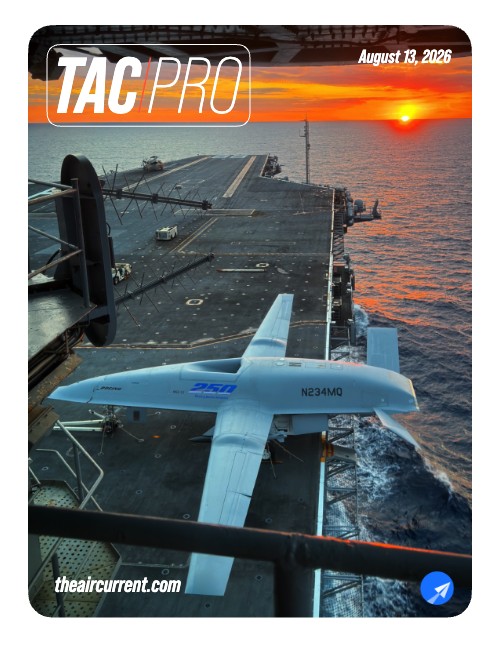
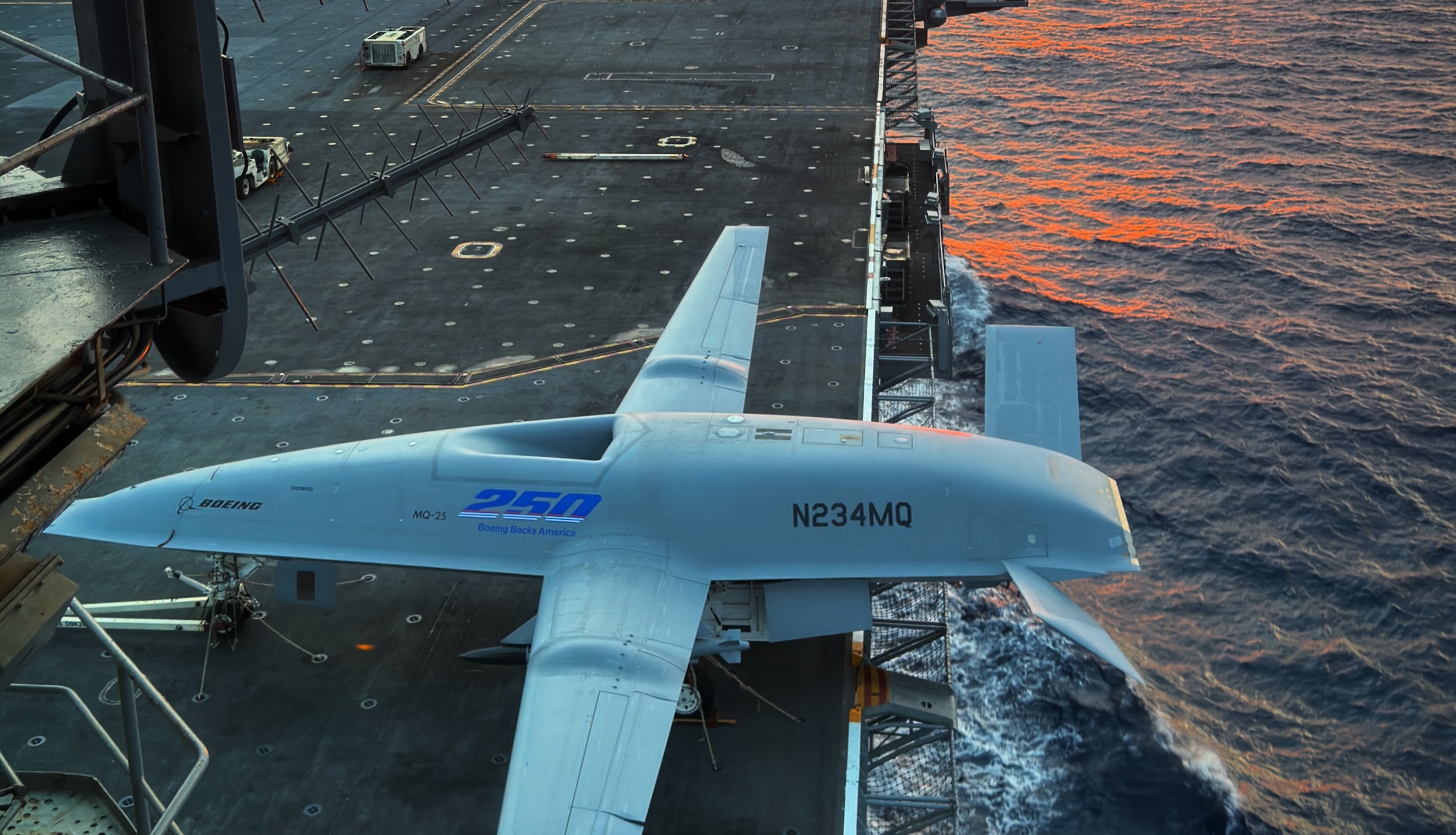
When Boeing personnel hoisted a prototype of its MQ-25 Stingray aerial refueling drone aboard the aircraft carrier USS Nimitz in June, the high-profile visit revealed a potential expansion of its role that has long been suspected but repeatedly denied by the Pentagon.
An unpublicized test during the demonstrator’s time aboard the Nimitz armed the aircraft with a Boeing-developed GBU-75 Joint Direct Attack Munition Long Range (JDAM-LR) cruise missile, marking the first time any weapon has been publicly observed on an MQ-25 in the program’s history. The testing aboard the Nimitz came five years after a Stingray completed its first deck-based carrier trials in 2021.
The MQ-25 program, part of the Navy’s push to modernize its carrier air wings and reduce risk through greater use of uncrewed aircraft, has always been characterized by the service as an aerial refueler with a secondary intelligence gathering mission. But given its origins in a program seeking to procure long-range, uncrewed strike capability, the biggest surprise may be that weapon integration testing took this long.
Subscribe to continue reading...Subscribe to Continue Reading
Our award-winning aerospace reporting combines the highest standards of journalism with the level of technical detail and rigor expected by a sophisticated industry audience.
- Exclusive reporting and analysis on the strategy and technology of flying
- Full access to our archive of industry intelligence
- We respect your time; everything we publish earns your attention