
Log-in here if you’re already a subscriber
Air safety reporting is made accessible without a subscription as a public service. Subscribe to The Air Current for full access to our scoops, in-depth reporting and industry analysis.
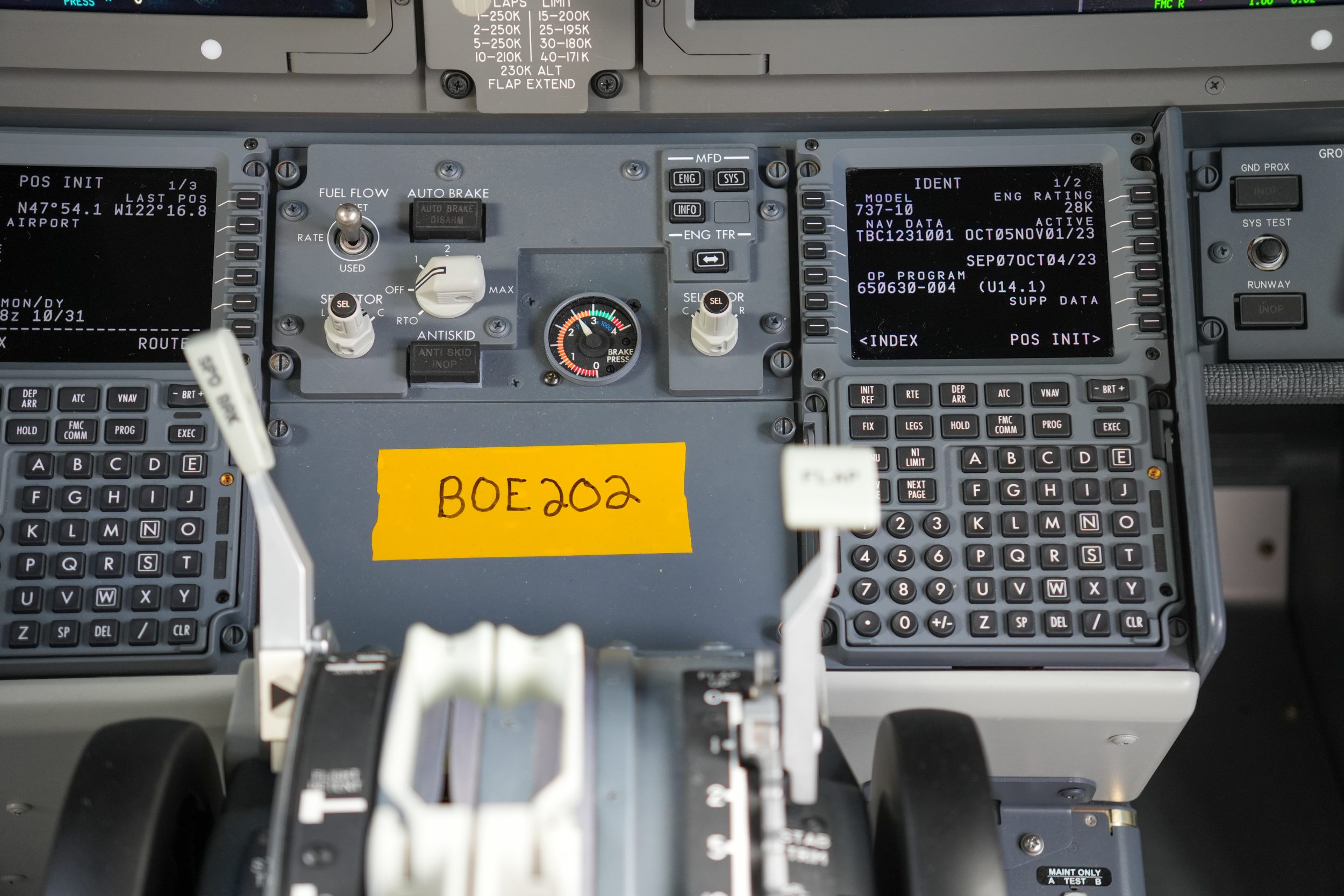
U.S. airlines are so concerned about glitches in the latest version of the flight management software for Boeing’s 737 Max aircraft that they have actively avoided installing it for years, preferring instead to rely on an earlier version rolled out nearly a decade ago, people familiar with the matter told The Air Current.
The aircraft’s software issues have made headlines over the past week as the Federal Aviation Administration conducted a safety review of a bug that can arise during missed landing approaches. That created a last-minute hitch for certification of the Boeing 737 Max 10 and uncertainty around the first delivery of the Max 7, both of which rely on the latest software versions.
The FAA on Friday convened a corrective action review board (CARB) and determined that the vertical navigation (VNAV) glitch, which first surfaced in operation with WestJet in November 2024, did not represent a safety risk “because pilots retain full control of the aircraft and the indications to the flight crew are clear and unambiguous,” according to a statement by the agency.
But U.S. airlines have long been aware of other anomalies plaguing the fourth major software update of the 737’s flight management system (FMS) since the 1997 introduction of the 737-700, developed for Boeing by GE Aerospace3. Found in versions U14, U14.1 or both, they range from loss of capabilities to crew distractions during critical phases of flight. One of them was identified as a contributing factor in a 2022 incident where a United Airlines crew landed on the wrong runway, spawning a National Transportation Safety Board investigation. The airline later decided to roll back from the latest versions of the software.
Related: Boeing faces potential 737 Max 10 delay as FAA reviews software issue
Software bugs are not uncommon in commercial aircraft from all manufacturers. But taken together, the multitude of issues plaguing the 737’s software exemplifies the complex technical and operational deliberations and high tensions among Boeing, GE, airlines and the FAA — all under the long shadow of the 737 Max’s twin crashes in 2018 and 2019 that killed 346 people.
The Friday determination by the CARB should clear the 737-7 to be delivered at year’s end and the 737-10 to be certified in the coming days, as neither will be dependent on GE and Boeing completing a clean iteration of the software expected in 2028. TAC understands that while much of the approval process for software updates is internal to delegated engineers at Boeing and GE, the FAA has significantly stepped up its oversight of the development process of the next version, known as U14.2.
Meanwhile, U.S. airlines flying the already-certified 737 Max 8 and 9 models have avoided upgrading to U14 and U14.1. United Airlines chose to downgrade, instead sticking with the older version of the FMS software, U13, that was introduced when the first 737 Max model was certified in 2017. While that version also has a known bug that is considered by the FAA to be a low-risk safety issue and will eventually require an airworthiness directive, airlines see it as less problematic than the host of issues that were introduced with U14.
“Operators of 737 airplanes can continue safe operations with all approved versions of the 737 Flight Management Computer software,” a Boeing spokesman said in an emailed statement to TAC. “We will continue to follow the lead of the FAA as our engineers work on the next software update.”
“Safety is our top priority. We are working closely with Boeing and will support the FAA’s evaluation,” a spokesman for GE Aerospace said in an emailed statement prior to the CARB’s Friday determination.
Safely managing the workload
The FMS is an aircraft’s operating system, managing each flight by constantly calculating its performance and route while abiding by constraints from published procedures, airline limits and crew selections. Though it is involved in all phases of flight, the FMS is considered to be essential — rather than critical — flight hardware, as cockpit philosophy dictates that pilots should be able to fly the aircraft without relying on automation. However, the FMS is intertwined with the human factors that result from the workload pilots face as they manage the flight in normal and abnormal operations.
A June 2022 incident aboard a United Airlines 737 Max 9 in which the aircraft landed on the wrong parallel runway at Pittsburgh International Airport was principally traced to the crew’s misidentification of the runway. However, the NTSB noted in its probable cause statement that a dual reset of the aircraft flight management computer displays contributed to distracting the crew while on final approach.
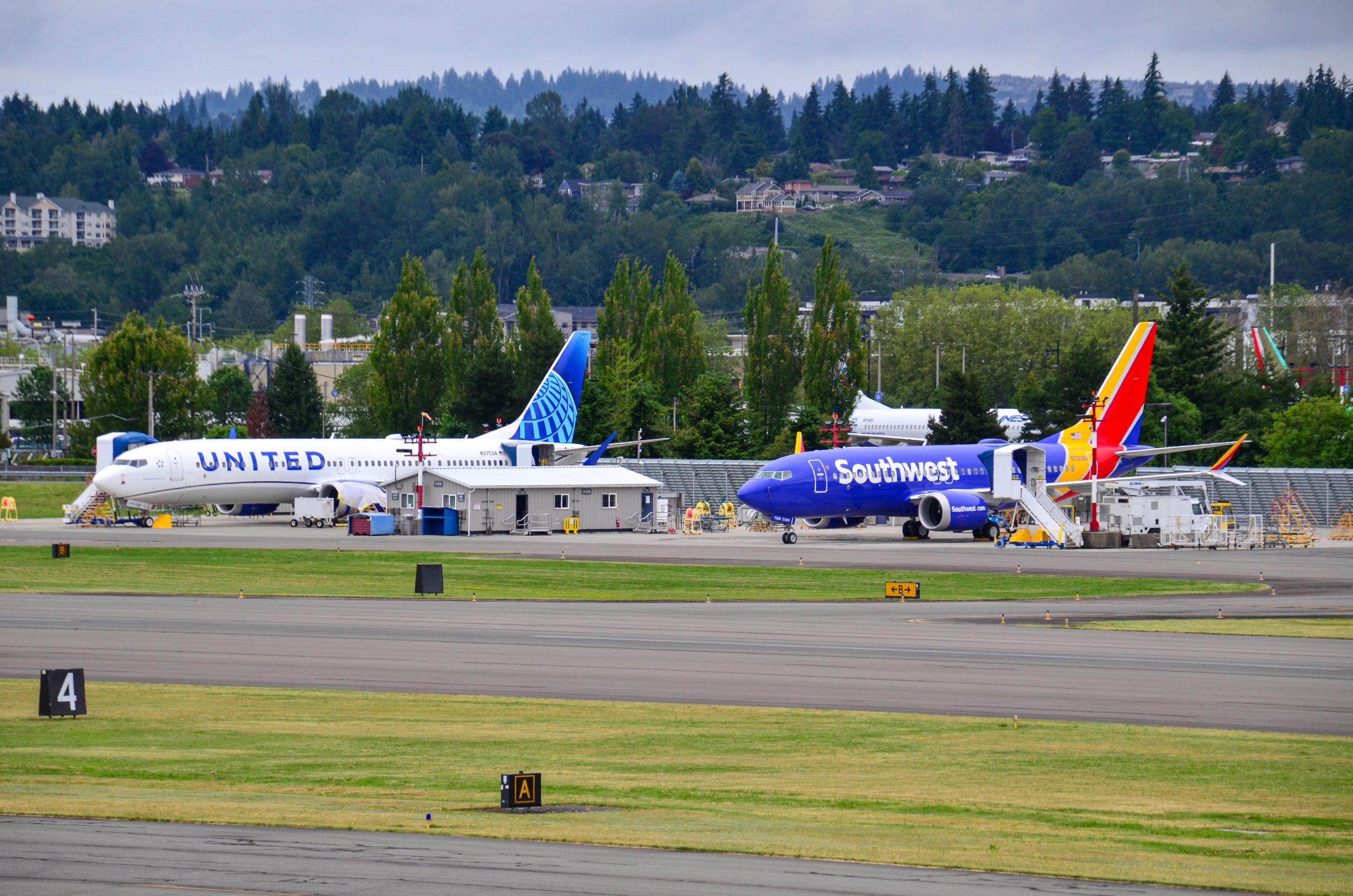
According to the NTSB’s final report on the incident, in which there were no injuries or damage to the aircraft, the FMS screen blanking and subsequent reset was traced to a problem introduced with the U14 version of the software “due to refinements made to the earth model.”
The board noted that the fault was reproduced in the lab and was not present in either U13 or U14.1, the latter of which had begun delivering on new airplanes earlier in 2022. Boeing had sent a service letter to operators related to the dual resets in February 2020.
That bug has since been fixed with U14.1 and is unrelated to the VNAV glitch that surfaced in 2024 and made headlines this week. But both software issues share a common concern in leading to flight crew distractions and increased workload during critical phases of flight.
“The issue that we’re looking at is the workload component,” FAA Administrator Bryan Bedford told reporters on Monday regarding the VNAV issue. As part of the CARB evaluation, FAA said test pilots flew missed approach procedures in a simulator to directly experience the anomaly.
VNAV, as its name suggests, manages the aircraft’s altitude with pre-programmed levels to be achieved at a given position, significantly reducing the workload for pilots to cross their preset waypoints compared to other, simpler autopilot pitch modes. The automation directs the aircraft to climb, descend and level off in accordance with those selected constraints, including during a missed approach if a crew opts not to complete a landing.
When a pilot alters their preprogrammed, published flight path following a missed approach, the FMC may transition from VNAV to a simpler level of automation for pitch control, according to Boeing.
One 737-rated airline pilot said this scenario is more common than being instructed by a controller to fly the missed approach procedure as published.
While the precise method of handling the bug in-flight has not been detailed by Boeing publicly, a person familiar with the issue tells TAC that one mitigation is a multi-step process to allow VNAV to reengage. Pilots are instructed to clear the active route in the computer, “down-select” then “up-select” the flight’s origin airport to remove all waypoints on the route and legs pages as well as the destination airport. Crews then re-enter the destination airport and select an approach procedure before reactivating the route and flying another approach using the LNAV and VNAV autopilot modes per normal airline operations.
“That’s a little bit dicey,” said one person familiar with the procedure, noting that it is “probably doable, but has to be trained.” Boeing prior to the public disclosure of the glitch asked operators to download flight data from flights where crews believed this bug manifested, and said it is working with airlines to formalize a procedure for addressing it in flight. That process may also include using a secondary option within the computer to duplicate a flight plan as a fallback should the VNAV glitch surface.
Boeing plans to issue a bulletin to airlines about how to recognize the bug if it should occur. The FAA said it will follow with its own Special Airworthiness Information Bulletin to both U.S. airlines and foreign regulators to ensure they’re aware of Boeing’s guidance.
It’s not yet clear how much training will be required to ensure pilots can safely manage the VNAV bug, should it be seen in service. Although a missed approach is already a high-workload situation, learning how to reset the flight plan in the middle of it could necessitate as little additional training as an e-learning and interactive FMS tutorial. With the CARB’s determination that the bug does not constitute a safety issue, it’s unlikely that a time-consuming simulator session will be required to prepare pilots.
Southwest, which requires all 12,000 of its pilots to be able to fly all versions of the 737s, told TAC in an emailed statement that it “remains in close contact with the Federal Aviation Administration and Boeing. We appreciate the Safety panel’s review and will work closely with our regulator and the manufacturer to ensure the airline is taking the appropriate steps to address this issue.”
The company expects to have the Max 7, which was certified with U14, delivered at year end and in service starting around spring 2027 and badly needs the model in order to accelerate retirements of aging 737-700s.
American Airlines and Alaska Airlines, both operators of the 737 Max, said that none of their single-aisle jets were running U14 or U14.1. Delta, which is a Max 10 customer, referred all questions to Boeing.
A history of hiccups
Version U13 of the FMS software adapted version U12 from the Next Generation 737 for the latest generation of the single-aisle. Version U14 has been in operation since 2020. It principally added optimizations for vertical navigation that took into account winds and temperatures aloft, as well as enabling future air navigation system (FANS)-2 datalink communications primarily used in Europe and rolling out globally.
TAC understands that the U14 software was expedited to ensure that the 737 Max was ready for the second generation of the FANS datalink. It also resolved an underlying safety issue within U13 software currently installed across most of the U.S. 737 fleet. That was obliquely referenced on Monday when Bedford told reporters that the U14 and U14.1 software updates under the microscope “fixed a known bug on the vertical navigation system” inside U13.
That U13 bug manifests in instances when the aircraft’s air data inertial reference unit (ADIRU) is providing bad data to the flight management system. In such cases, the FMS can provide “misleading vertical guidance,” according to two people familiar with the issue, commanding the aircraft low on a path while the display to flight crew indicates the aircraft is on a safe trajectory.
The issue was discovered during flight simulator sessions and, to the FAA’s knowledge, has never been encountered in service by any airline globally. According to the regulator, Boeing did not consider it to be a safety issue, but the FAA determined through its own assessment that the U13 misleading vertical guidance glitch represented a safety risk, albeit a low one. The agency told TAC it is preparing a notice of proposed rulemaking as a prelude to an airworthiness directive (AD) to address the issue, and may give airlines as long as 54 months4 before any compliance deadline.
People familiar with the situation say the proposed method of complying with the notional directive will be adopting the U14 software, which today contains the VNAV glitch. The protracted compliance period would also allow airlines to install U14.2 once it becomes available.
U14 also brought a host of other issues that caused U.S. airlines to balk at loading the update or accepting jets with the update installed. According to a July 2026 FAA document posted to the agency’s website, the U14 software “does not properly process” certain types of messages sent over the United States’ controller pilot datalink communications (CPDLC) system, which allows air traffic controllers to communicate with pilots through text communications.
The glitch in U14 causes an abrupt termination of the connection, meaning the aircraft “cannot participate in en route domestic CPDLC,” according to a separate explanatory FAA document. The issue can be resolved by installing version 14.1 or waiting for the in-development 14.2.
The same datalink glitch appeared on an earlier November 2024 version of the same FAA document that recommended downgrading to versions U11, U12 or U13 — suggesting the new software previously impacted datalink capabilities on the Next Generation 737s, too.
The agency’s protracted consideration of the AD, which has gone on for years according to people familiar with the issue, speaks to operators’ wariness of being mandated to adopt U14 and its glitches. For now, the U.S. airlines “see U13 as the lesser of the two evils,” said one of the familiar people, referring to U14 and U14.1.
United declined to comment on the 2022 incident in Pittsburgh and any relation it may have to its software decisions, but said in a statement that it “does not currently have any 737s operating with this new FMC software, and we are not taking deliveries of new [Max 8 and 9] aircraft with the new FMC software.”
Rollbacks and solar flares
Prior to the 2022 incident, United Airlines and Southwest Airlines faced another glitch in U14 after it was introduced: a compatibility problem that affected the heads-up displays in their aircraft. That was later resolved when U14.1 was certified in 2022, but contributed to airlines’ reluctance to adopt another update, according to two people familiar with the issue.
Instead, Southwest and United have insisted on taking delivery of new Max aircraft from Boeing that don’t have any version of U14 software. The 737 Max 8 and 9, both certified with the U13 software, enabled operators to roll back to the earlier version and avoid U14.
However, the rollback process is far from straightforward and is complicated by another previously unreported issue. Several people familiar with the situation tell TAC that GE in recent years was required to update the memory inside its flight management computer hardware with additional protection for onboard electronics susceptible to interference from solar radiation.
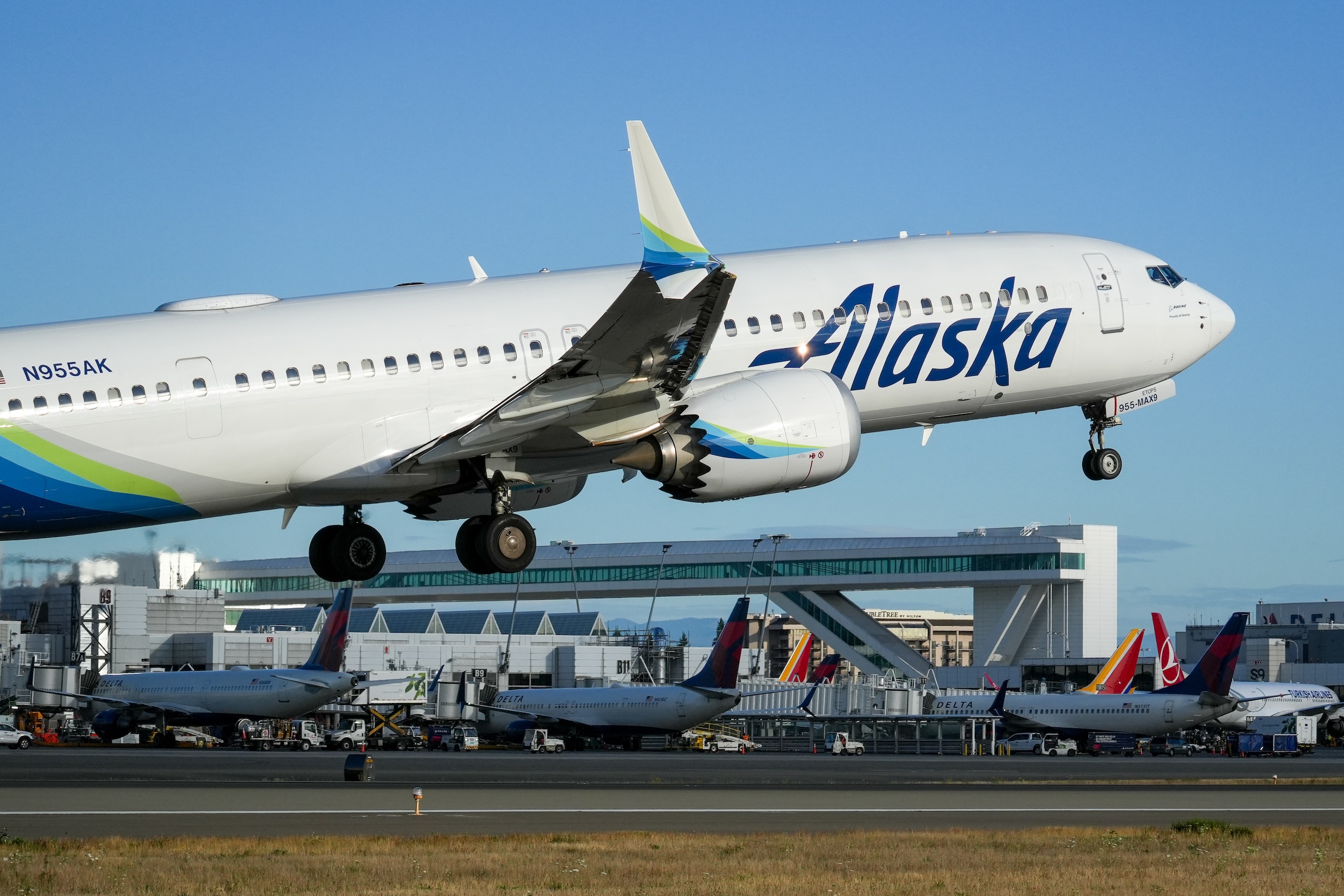
That new hardware configuration, known as C2, is the baseline for the Max 7 and 10 and is in early production on the Max 8 and 9. Both new variants are baselined for use with U14 and U14.1, respectively, in part because of the need to resolve the issue with misleading vertical guidance in U13. Since the C2 hardware configuration is not compatible with U13 software, any aircraft equipped with it cannot be rolled back.
United and Southwest have requested Boeing airplanes with the older GE hardware, known as the C1 configuration, to allow for certified rollback to U13, according to people familiar with both carriers’ requests. A person familiar with GE’s products said hardware delivered under the C1 moniker today has hardened memory, but is still able to be shipped with the older software.
Yet another reason U.S. operators are reluctant to adopt the latest software upgrade: when paired with U14.1 software, the legacy C1 hardware with memory susceptible to solar radiation includes a limitation for the most demanding type of satellite-guided approaches. For RNP AR approaches, aircraft with that hardware and software pairing are prohibited from operations that require a lateral accuracy less than 0.3 nautical miles.
That’s particularly important in states like Alaska, where RNP AR was pioneered to allow precision approaches in inclement weather. The FAA panel’s finding on Friday resolves a key concern for Boeing, putting the company on course to unlock as much as $2 billion in cash next year from the Max 10 models it is already building in anticipation of certification, according to analyst Matthew Akers of BNP Paribas. But the welter of other issues involving the 737’s FMS software suggest the plane maker and GE still have much work to do.
Julie Johnsson contributed to this article
Write to Jon Ostrower at jon@theaircurrent.com
Subscribe to The Air Current
Our award-winning aerospace reporting combines the highest standards of journalism with the level of technical detail and rigor expected by a sophisticated industry audience.
- Exclusive reporting and analysis on the strategy and technology of flying
- Full access to our archive of industry intelligence
- We respect your time; everything we publish earns your attention