
Log-in here if you’re already a subscriber
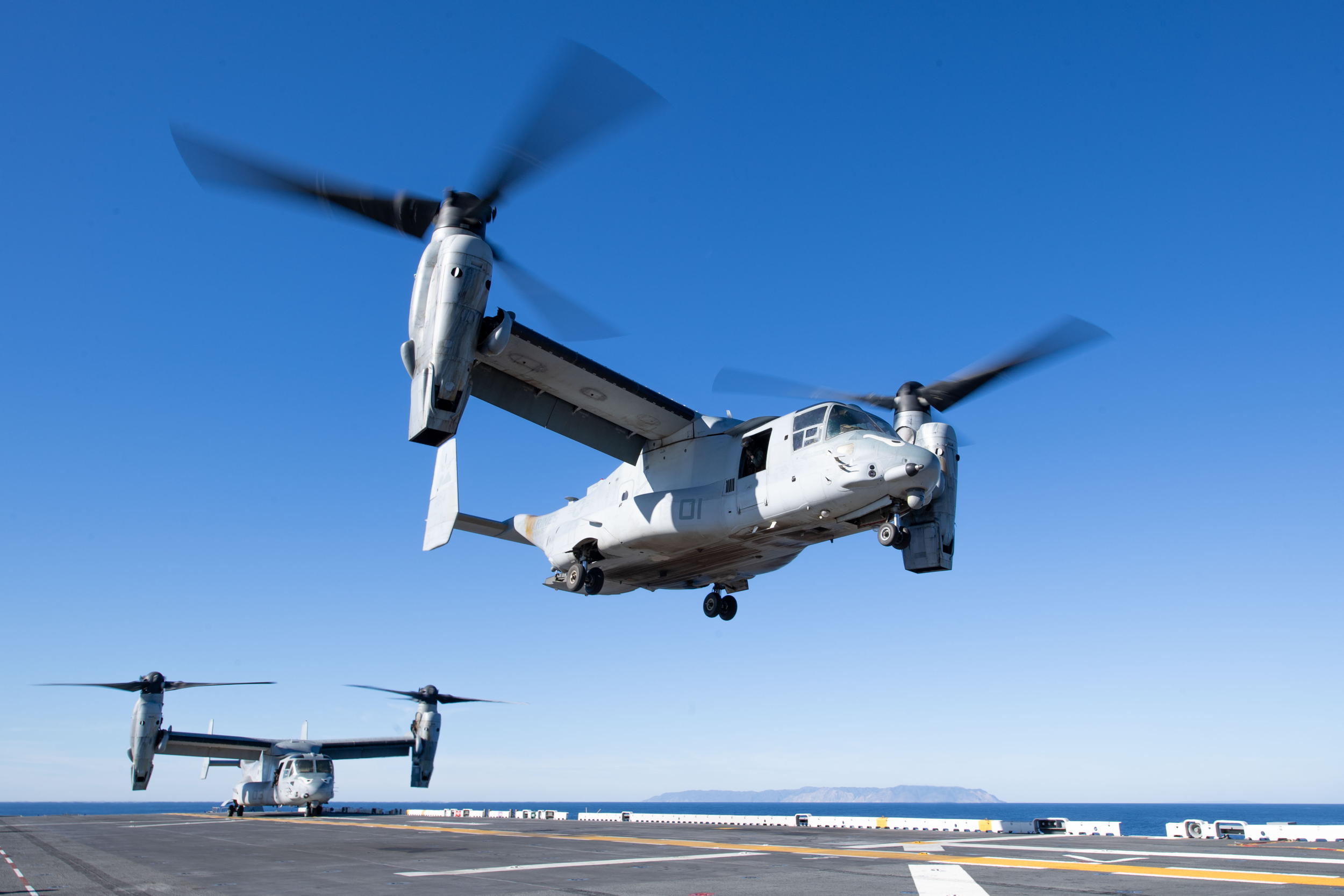
A comprehensive review of the V-22 Osprey released Dec. 12 by the U.S. Navy’s Naval Air Systems Command (NAVAIR) exposes critical safety and readiness concerns with the Bell-Boeing tiltrotor, including serious safety risks that have persisted for years and remain unresolved.
The review confirms January 2025 reporting by The Air Current that the V-22 fleet continues to face a serious risk of catastrophic accidents due to impurities, known as inclusions, in the X-53 steel alloy used to make its transmission gears. Yet that is only one of a dozen V-22 safety risks that have been formally classified by the program as “I-D,” meaning they have the potential to cause a catastrophic outcome (I) and can be expected to occur at least once per million flight hours (D) — a much higher frequency than is tolerated for initial type certification of almost all civil and military aircraft.
Related: V-22 Ospreys will face ‘serious’ risks from flawed gears for foreseeable future
The review found that while “adherence to airworthiness standards is rigorously enforced as part of the initial Military Type Certificate … NAVAIR does not regularly revisit airworthiness certifications and standards to analyze continuing accumulated safety risk and impact to flight suitability,” meaning risks can compound in aircraft in service to a level beyond what would normally be considered acceptable. In the case of the V-22, “risks were often identified but not actively worked to closure, resulting in delays and an increasingly elevated safety risk posture,” the document states.
The review arrives on the same day as a critical report by the U.S. Government Accountability Office (GAO) that addresses many of the same topics at a high level and highlights additional concerns with the V-22 program.
Persistent problems
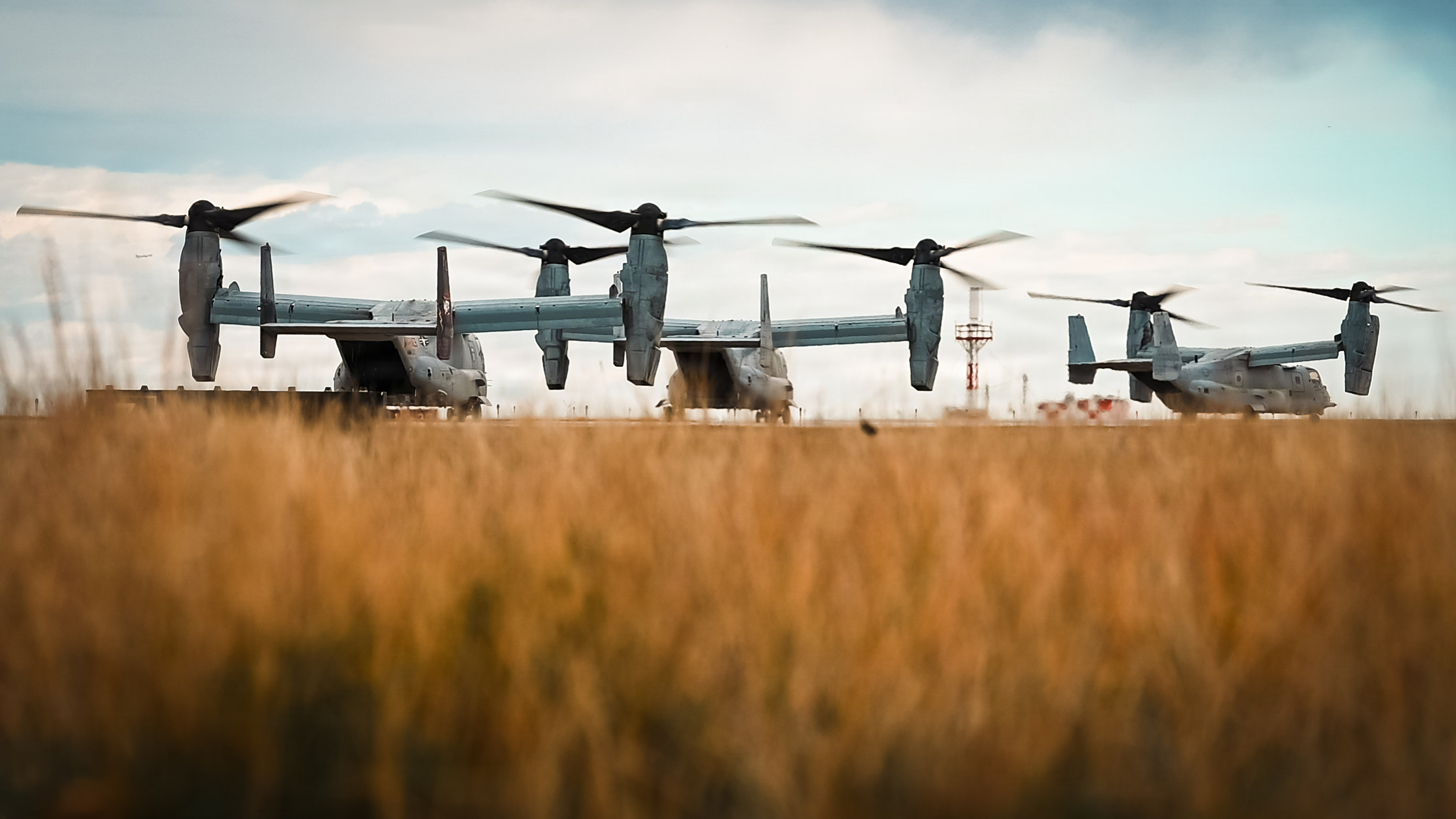
NAVAIR initiated its comprehensive review in September 2023 after three Osprey accidents killed a total of 12 servicemembers within a span of 18 months. Just two months later, a U.S. Air Force CV-22B crashed near Yakushima Island, Japan, killing another eight servicemembers and prompting a full grounding of the V-22 fleet from December 2023 to March 2024.
The public report on the Yakushima crash, released in August 2024, acknowledged that the accident was caused by a catastrophic failure of the left-hand proprotor gearbox but did not elaborate on the source of the failure. Engineering reports from the investigation suggested the root cause was likely cracking in a high-speed pinion gear due to an inclusion — a flaw that created a weak point in the gear material.
TAC reported at the time that non-public system safety risk assessments (SSRAs) showed NAVAIR had known about the risk associated with inclusions for over a decade, but had not communicated that risk to operators.
Related: Flawed metal & failed communication: Breaking down the Air Force’s fatal Osprey crash
In November 2024, another CV-22B experienced the failure of a critical gear due to an inclusion. While that aircraft landed safely, the incident prompted a partial grounding of the V-22 fleet and the introduction of new risk controls. Because an investigation into the history of inclusion-related gear failures in the Osprey fleet determined that most of these failures happened early in the life of the gears, aircraft with low-time gears were subject to additional restrictions.
NAVAIR also made the decision to upgrade the material for critical V-22 gears from a “double-melt” X-53 alloy to one made using a triple-melt process. A December 2024 SSRA reviewed by TAC estimated the shift to triple-melt would lower the risk of inclusion-related failures by 85%, but concluded that this would still not be sufficient to reduce the expected catastrophic failure rate below once in a million flight hours. “Regardless of the options pursued, the risk will remain I-D, Serious risk for the foreseeable future,” the SSRA concluded.
The comprehensive review published Dec. 12 lists 11 additional outstanding SSRAs for the V-22 classified as I-D, as well as one classified as II-C that has a lower estimated severity but a higher estimated frequency — also characterized as serious.
These unresolved SSRAs include some open risks which the program has designated as “controlled,” such as the risk of a rapid power loss and surge in the aircraft’s Rolls-Royce AE 1107C engines during reduced-visibility landings. They also include “accepted” risks that have been mitigated, such as compromise of the crew/passenger cabin during a crash. The GAO notes in its own report that some SSRAs address general risks not specific to the Osprey, such as wire strikes and aerial refueling risks, which remain open for the purpose of monitoring for trends.
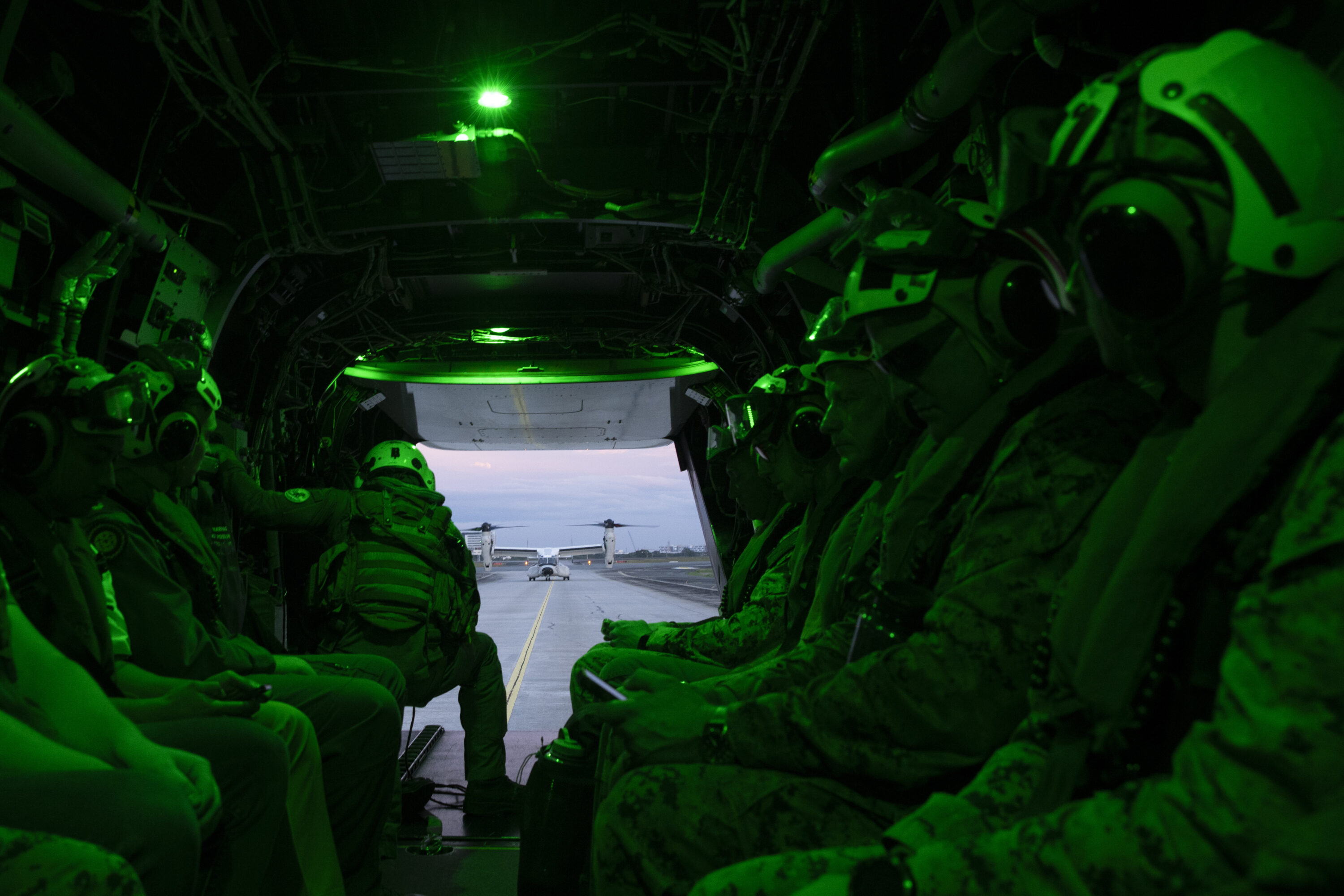
The review indicates that these 12 unresolved SSRAs at the I-D level exceed the number for any other aircraft in the Navy’s fleet. The V-22 has an additional 16 unresolved SSRAs classified as I-E, meaning they have the potential to cause a catastrophic outcome but an expected frequency of less than once in a million flight hours.
Only the Lockheed Martin F-35 has a higher total number of unresolved catastrophic SSRAs, although just two of the F-35’s SSRAs are classified as I-D. The review also notes that the V-22’s outstanding material risks also tend to be much older than those of other Naval Aviation platforms, meaning they have been understood and tolerated for a longer period of time.
“The V-22 Enterprise has not developed, adequately resourced and implemented risk remediation plans in a timely manner to reduce the overall risk posture of the platform,” the review states. It notes that six of the 12 unresolved risks classified as I-D have been realized during 74 in-flight events over the life of the program, three of which had catastrophic outcomes.
Closing the loop
In its comprehensive review, NAVAIR makes a number of safety-related recommendations, both to address specific risks associated with the V-22 platform and to improve the safety of the program more broadly.
The review advises the services to continue assessing accelerated implementation and fielding of proprotor gearbox material fixes, including retrofit of triple-melt gears and deployment of the Osprey Drive System Safety and Health Information (ODSSHI) system for gearbox vibration monitoring.
The V-22 Joint Program Office, PMA-275, originally expected to begin fielding triple-melt gears in summer 2025 but subsequently pushed that timeline back to January 2026. A spokesperson for the office told TAC by email on Dec. 2 that upgraded proprotor gearboxes “are being fielded on schedule with full triple-melt gears expected to begin delivering in January 2026.” Meanwhile, initial ODSSHI kit installation is currently under way, the spokesperson said on Dec. 11.
The comprehensive review also recommends accelerated testing and fielding of a redesigned input quill assembly (IQA). This part of the proprotor gearbox attaches to the engine and has been implicated in the hard clutch engagement (HCE) phenomenon responsible for the June 2022 fatal crash of a U.S. Marine Corps MV-22B. According to the PMA-275 spokesperson, a redesigned IQA is now in component testing.
The review notes that HCE was first observed in 2010 and classified as a I-D serious risk. While the V-22 program conducted a clutch redesign, fault testing and updated procedural guidance and simulators, an “incomplete understanding” of the IQA failure mode meant it “did not put in place effective risk-reducing mitigations against the worst credible outcome until 2023. Additional HCE events continued to occur until a life limit was imposed in 2023,” the review states.
The review points to HCE and the X-53 inclusion risk as examples of why the program office needs a “closed loop” safety system that “continuously identifies and assesses risks, communicates the risk to users, implements interim mitigations, and persistently drives the development and deployment of both material and non-material solutions to further reduce or eliminate those risks.
“When the V-22 Enterprise does not actively manage risks with the potential for catastrophic outcomes, the risks compound, increasing the likelihood of a catastrophic event that, if left unaddressed, will ultimately occur,” the review states.
The review recommends that the program office develop full and partial mitigation plans to eliminate and downgrade any open SSRAs classified as I-D or I-E. It also makes some broader safety recommendations that have already been implemented, such as directing all program executive officers to conduct annual reviews of all program risks as well as ensuring that all open risks, interim mitigations and action plans are briefed annually to fleet users.
The GAO report emphasizes that the V-22 program also faces significant non-system safety risks associated with maintenance and operations. “For example, mismatches in maintenance skill and proficiency levels and heavy maintenance workloads coupled with aircrew experience levels have presented safety concerns for Osprey squadrons,” the GAO writes. “These factors have limited the number of aircraft available for training, hindered training opportunities to build aircrew experience, and have contributed to higher safety risks.”
Readiness woes
NAVAIR paints a bleak picture of V-22 readiness in its comprehensive review, citing average mission-capable rates between 2020 and 2024 of around 50% for the Navy and Air Force and 60% for the Marines. The review defines “mission-capable” as “aircraft is operational but may have minor defects that do not affect mission execution.”
Such low mission-capable rates force the services to rely on “planning factors — essentially procuring and maintaining extra aircraft to meet mission requirements. This ‘fact of life’ sustainment strategy, driven by low readiness, is costly, inefficient, and has serious operational consequences, especially on space-constrained CVN aircraft carriers,” the review states. The Osprey has seen a 30% increase in operating and maintenance costs per flight hour over the past four years, the review adds.
NAVAIR identifies four main factors responsible for missing readiness targets, including a failure to share and implement known aviation maintenance best practices across the services, “suboptimized” supply systems and maintenance programs, persistent reliability issues and inventory management challenges. The review makes a number of related recommendations, including developing and implementing a V-22 mid-life upgrade program — something it also reiterates as a safety recommendation.
“The V-22, a first-generation tiltrotor aircraft fielded in 2007, has not gone through a major mid-life upgrade. As a result, V-22 is dealing with legacy technical issues that have yet to be resolved that impact the safety and readiness of the platform,” the review states.
“Given that the V-22 is expected to remain in service for over 30 more years, it is crucial to develop and implement a comprehensive, long-term sustainment strategy that improves readiness at a lower cost, while swiftly applying proven aviation maintenance best practices across the V-22 enterprise.”
Write to Elan Head at elan@theaircurrent.com
Subscribe to continue reading...Subscribe to The Air Current
Our award-winning aerospace reporting combines the highest standards of journalism with the level of technical detail and rigor expected by a sophisticated industry audience.
- Exclusive reporting and analysis on the strategy and technology of flying
- Full access to our archive of industry intelligence
- We respect your time; everything we publish earns your attention