
Log-in here if you’re already a subscriber
It was a sunny morning in March in the skies northeast of Alpharetta, Georgia, and I was struggling to maintain my bank angle in slow flight. As our Cessna 172 slowed to 60 knots, my flight instructor advised me to limit my bank angle to 10 degrees. But the controls were mushy at that speed, and she pointed out that I kept nudging our aircraft deeper into a turn, increasing our risk of a stall.
Her feedback registered vividly at the time. Thirty minutes later, it was blurring in my brain with her advice for steep turns and S-turns, plus the demands of navigating back to DeKalb Peachtree Airport while scanning for other aircraft and making radio calls. Once the plane was safely on the ground, I was distracted by unrelated concerns, including the cross-country road trip I would be departing on that afternoon.
Months later, I can recall this specific detail from my first formal fixed-wing lesson only because I have a comprehensive summary of the flight by Navi AI, an artificial intelligence platform developed specifically for flight training, which The Air Current was given access to for the purpose of trialing in a real-world environment. On the same day the company emerged from stealth with more than $6 million in total funding from backers including United Airlines Ventures and New Vista Capital, I gave its product a test drive, piggybacking on a block of flight lessons I had scheduled for my niece over her spring break.
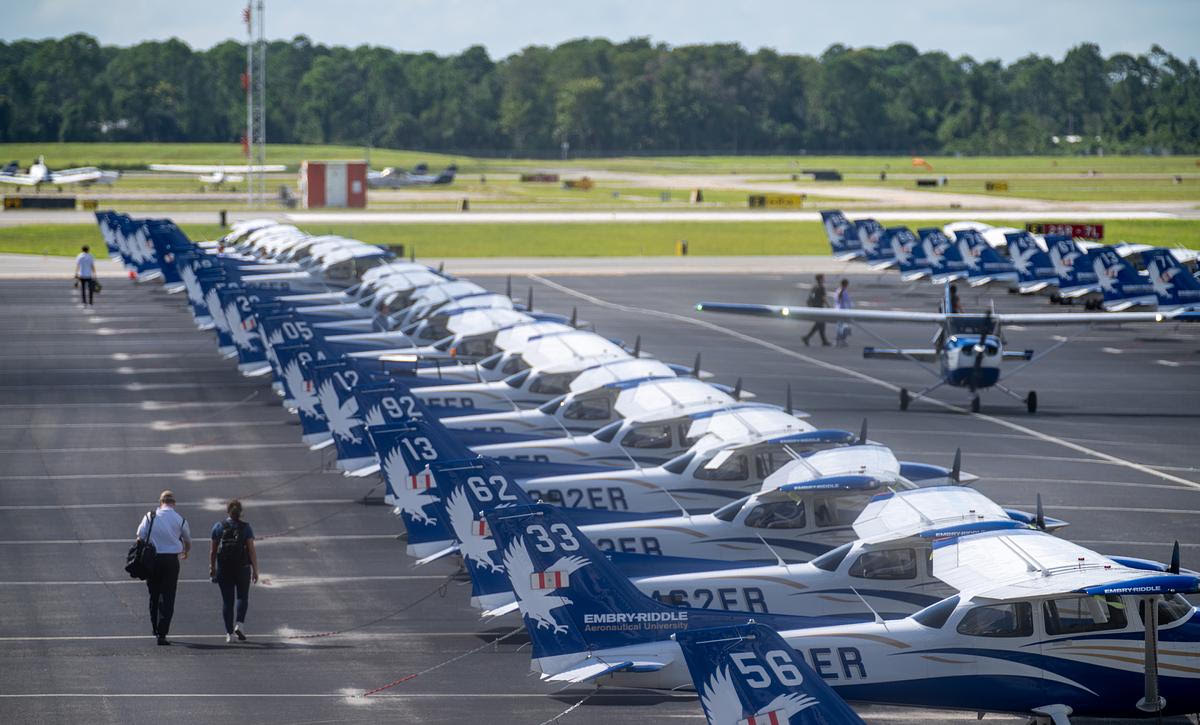
Despite some minor flaws, the Navi app was genuinely impressive; a tool that I would have been glad to have during my own time as a helicopter student pilot and flight instructor. As I learned in subsequent interviews, getting the system to this point was not a simple process. Introducing AI into training for safety-critical roles is inherently fraught, involving nuanced questions surrounding technology, pedagogy and ethics. Navi is tackling them in partnership with Embry-Riddle Aeronautical University, which is now rolling out the platform to its entire flight training department.
“What we’re looking at is not a binary ‘it’s good, check mark, send it into the fleet,’ but what is it good at? Why is it good at it? What needs to be improved?” explained Andrew Schneider, an assistant professor and director of flight research at Embry-Riddle Daytona Beach in Florida. “And there’s a lot of different layers that go into making that determination.”
Subscribe to continue reading...Subscribe to Continue Reading
Our award-winning aerospace reporting combines the highest standards of journalism with the level of technical detail and rigor expected by a sophisticated industry audience.
- Exclusive reporting and analysis on the strategy and technology of flying
- Full access to our archive of industry intelligence
- We respect your time; everything we publish earns your attention