
Log-in here if you’re already a subscriber
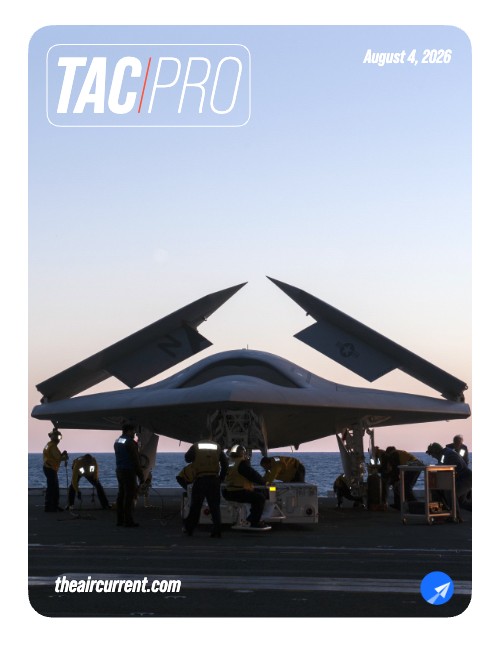
The U.S. Navy has asked defense contractors to develop a new uncrewed aircraft with a focus on long-range strike capability, signaling its vision for future carrier air wings and the fleet’s broader strategy as the service races to adapt to the growing threat of long-range counter-air weapons in the Indo-Pacific.
A July 14 request for information (RFI) seeks proposals for a high-end, multi-role aircraft — or several single-role aircraft in a family of platforms — that would join the Navy’s rapidly modernizing carrier air wings as a strike aircraft. The service is looking for an aircraft with a 1,000-nautical mile combat radius, the ability to operate over hostile skies and a generational leap in combat superiority over the F/A-18 Super Hornet and other fourth-generation fighters.
It’s the latest request in a long series of high-end capabilities sought for the service’s future carrier air wing concept, which already includes the uncrewed Boeing MQ-25A Stingray tanker, the sixth-generation F/A-XX fighter jet and its associated Collaborative Combat Aircraft (CCA), all three of which are in various stages of development.
However, the carrier air wing concept to date has lacked a low-risk, purpose-built aircraft capable of carrying out long-range strikes. Such an aircraft would align closely with the Navy’s goal of spreading its assets and firepower more broadly across the Pacific. Dispersing the fleet across the vast ocean aims to lower the risk to pilots and sailors, shifting the focus to fielding longer-range aircraft and weapons. An uncrewed aircraft that can perform strikes up to 1,000 nautical miles away without refueling — a greater combat range than anything the Navy currently fields — frees up high-demand crewed fighters traditionally relegated to buddy refueling missions during long-range combat operations.
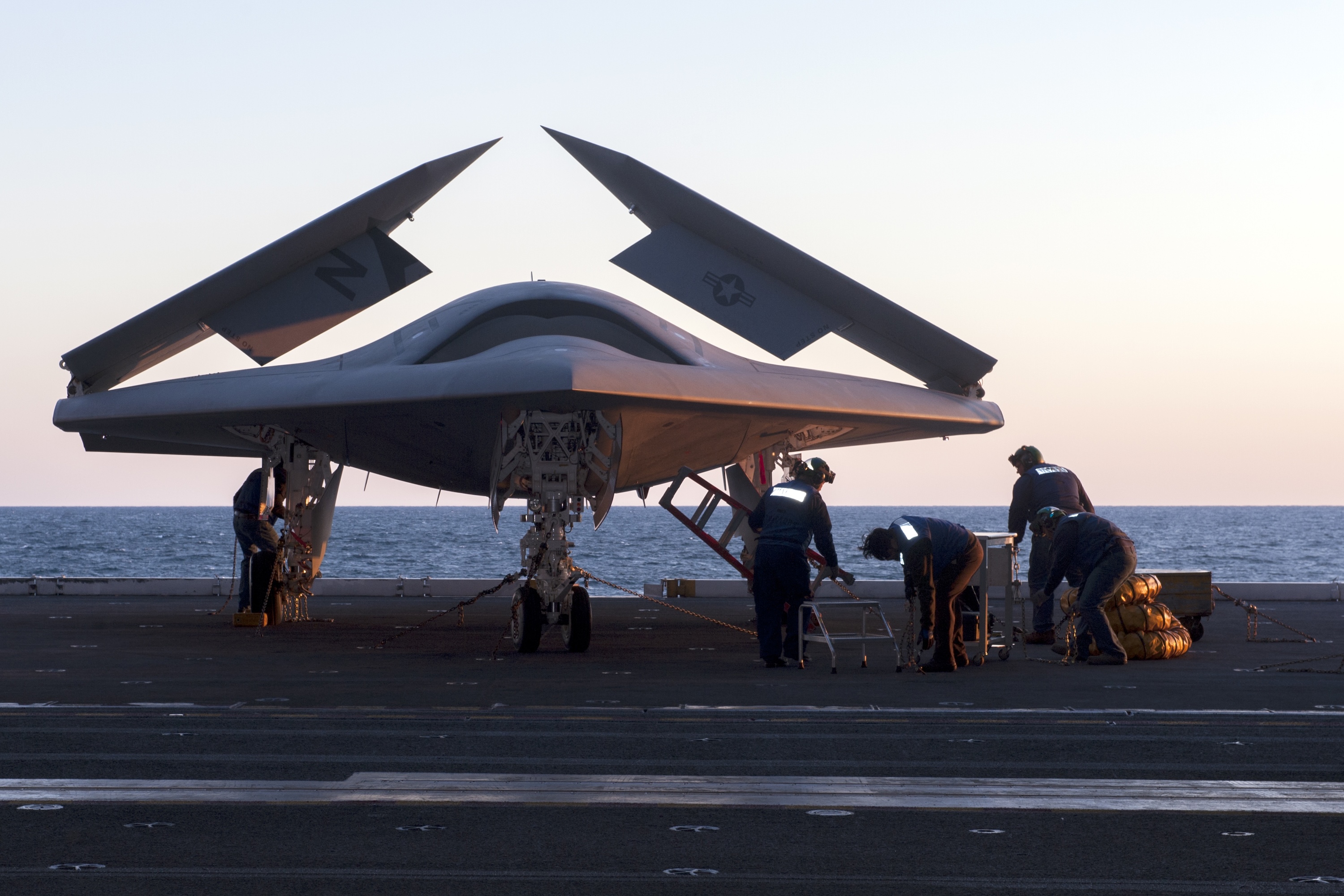
With the Navy increasingly facing questions around the continued viability of carriers in the Pacific theater as it watches China’s military ascent, the service hopes to rapidly fill this crucial role with all-new capabilities developed by industry newcomers like Shield AI and Anduril — or perhaps with a previously-shelved Northrop Grumman uncrewed strike platform that was on the brink of achieving success a decade ago.
Subscribe to continue reading...Subscribe to Continue Reading
Our award-winning aerospace reporting combines the highest standards of journalism with the level of technical detail and rigor expected by a sophisticated industry audience.
- Exclusive reporting and analysis on the strategy and technology of flying
- Full access to our archive of industry intelligence
- We respect your time; everything we publish earns your attention