
Log-in here if you’re already a subscriber
Air safety reporting by The Air Current is provided without a subscription as a public service. Please subscribe to gain full access to all our scoops, in-depth reporting and analysis.
A year before two recent evacuations of a Washington, D.C-area air traffic control facility, a previously unreported incident caused smoke to enter the control room but did not result in an evacuation. The April 2025 event left multiple controllers with health issues that resulted in the loss of their medical certificates, which are required to work traffic.
The April 2025 event, which The Air Current confirmed through interviews with people familiar with the episode, occurred under similar circumstances to the recent events on March 13 and 27. Smoke filled the control room at the Potomac Terminal Radar Approach Control (TRACON) facility after employees began smelling a strange odor, but emergency services were never called.
The incident raised serious concerns internally regarding the Federal Aviation Administration’s incident response plans, the familiar people said.
“We take the health and wellbeing of our workforce seriously,” an FAA spokesperson said in an emailed statement. “That’s why we evacuated Potomac TRACON on March 13 and March 27 due to a strong chemical smell, as we do when events like this occur at any air traffic control facility.”
The agency did not answer questions when asked about the April 2025 event. “The FAA evaluates lessons learned from every event to see if we can improve our processes. The equipment outages underline the immediate need to replace our aging equipment and give our air traffic controllers the facilities and technology they need to do their work.”
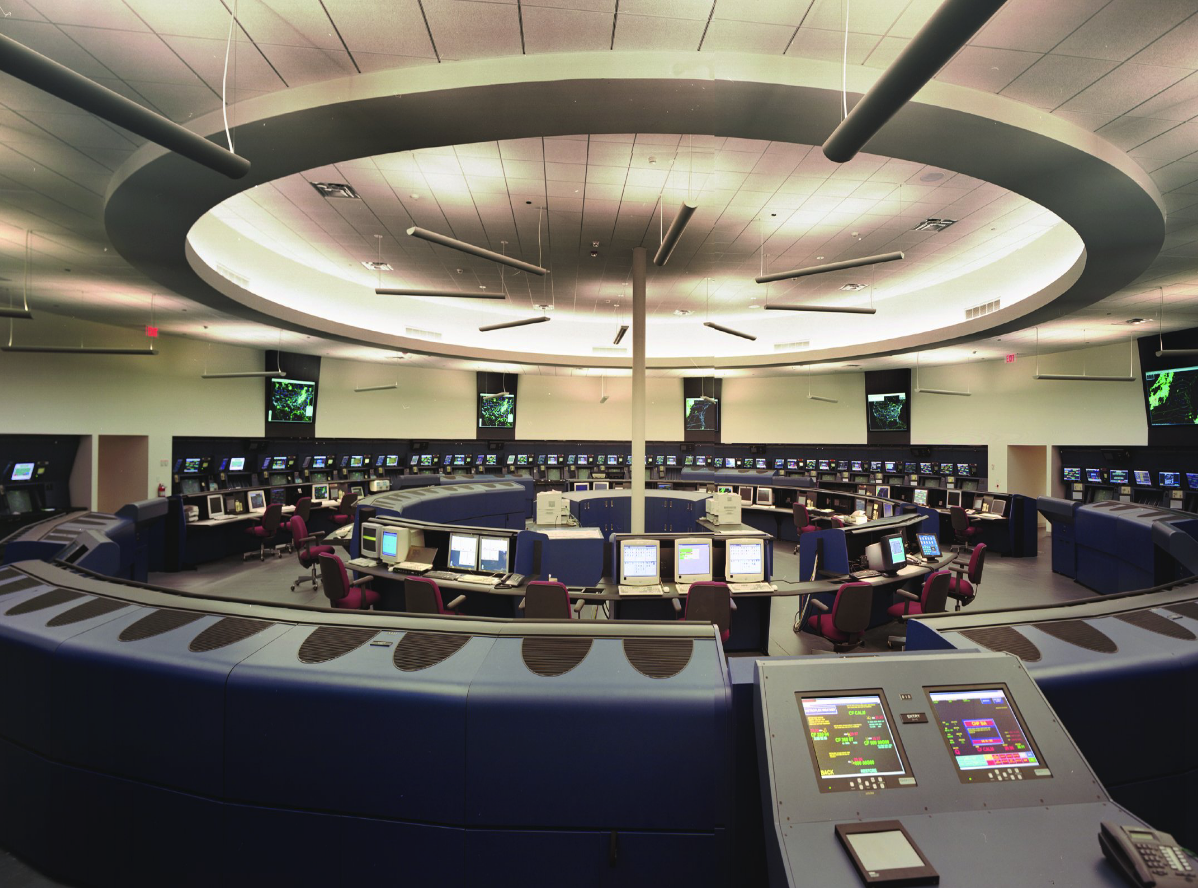
The Potomac TRACON, which is located next to the FAA’s nationwide air traffic command center in Warrenton, Virginia, is one of the newest ATC facilities in the country but has been unable to escape disruptive equipment issues that have thrust the NAS into the national spotlight.
Built in 2002, the Potomac TRACON is one of the FAA’s preeminent next generation air traffic facilities, featuring the newest equipment and design features. It consolidated controllers from five different TRACON facilities in the area under one roof, streamlining traffic flows in one of the busiest airspaces in the country.
The two evacuations last month each prompted prolonged ground stops for Washington’s Reagan National (DCA) and Dulles International (IAD) airports as well as the Baltimore-Washington Airport (BWI) and the primary commercial airport in Richmond, Virginia (RIC).
The March 13 event, which paused traffic for more than two hours, was caused by a faulty voice switch which burned up, according to Fauquier County Fire Department reports obtained through the Freedom of Information Act (FOIA). Voice switches are the panels located at every ATC workstation which allow controllers to toggle between different frequencies and conduct internal coordination calls.
Records show that patients evacuating the building presented with “nausea, dizziness, and vomiting,” and responders ultimately assessed 36 people from that single event. Controllers’ careers are dependent on maintaining a medical certification from the FAA, which can be lost for any number of health reasons and for varying periods of time, ranging from temporary restrictions to a permanent loss.
Separate FOIA records show that the March 27 event was caused by an “overheated battery back-up” found in the break room and that employees presented with complaints of “cough, dizziness, and headaches.” A union email reviewed by TAC said that the National Air Traffic Controllers’ (NATCA) Wi-Fi equipment was identified as the ultimate cause. The evacuation that followed resulted in a 90-minute ground stop for the same airports.
A NATCA spokesperson did not respond to a request for comment.
The evacuations during both incidents last month were in part prompted by the severity of the April 2025 event, people familiar with the matter said, and are now standard for these types of events. No records exist for the April 2025 event because emergency services were not called.
Evacuations are especially challenging for the 24/7 operation at an air traffic facility, where even a short interruption can cause rippling delays and cancellations for hours.
On March 23, the tower at Newark Liberty International Airport was evacuated after a burning smell began emitting from an elevator — the same day as the fatal runway collision at New York’s LaGuardia Airport. On Oct. 10, Atlanta International Airport’s control tower was evacuated after a fire alarm was pulled for a gas smell, compounding delays that had been induced by a government shutdown that affected air traffic controllers.
Equipment issues can impact operations even if controllers aren’t evacuated. Newark in particular has been plagued with repeat radar and communications issues over the last two years after the control of its airspace was relocated from a facility on Long Island to Philadelphia.
Potomac and the rest of the NAS’s facilities have slipped into a state of physical decline. U.S. facilities that control aircraft arriving and departing at airports have an average age of about 36 years with some as old as 60 years, according to a 2023 FAA report. Enroute facilities, which control aircraft in cruise flight, have an average age of 56 to 64 years, the report said. No replacement plans existed for either type of facility until the FAA rolled out its latest modernization plan last year.
As a part of its latest effort to modernize the NAS, the FAA has moved to replace the voice switches which were the culprit of the March 13 incident, most of which are decades old. The agency spokesperson said the FAA has installed 34 new digital voice switches across the country of the 462 it plans to replace by 2028.
About $2 billion of the $12.5 billion appropriated by Congress last year for ATC modernization is set aside for facility consolidation. Though congressionally mandated, consolidation remains a thorny political topic for labor unions and some members of Congress looking to protect jobs in their areas and avoid the forced relocation of controllers.
Subscribe to The Air Current
Our award-winning aerospace reporting combines the highest standards of journalism with the level of technical detail and rigor expected by a sophisticated industry audience.
- Exclusive reporting and analysis on the strategy and technology of flying
- Full access to our archive of industry intelligence
- We respect your time; everything we publish earns your attention