Log-in here if you’re already a subscriber

Air safety reporting is made accessible without a subscription as a public service. Subscribe to The Air Current for full access to our scoops, in-depth reporting and industry analysis.
Just a year after the U.S. National Transportation Safety Board was created by Congress in 1967, the organization began calling attention to the alarming rate of midair collisions, which spiked by 46% in 1968 alone. In a special investigative report on the topic issued in 1969, the Board formalized a recommendation to the Federal Aviation Administration to support the “expeditious development of low-cost collision avoidance systems for all civil aircraft.”
It would take another 18 years before Congress in 1987 finally passed legislation mandating all commercial air carrier airplanes be equipped with a Traffic Collision Avoidance System (TCAS) that provides pilots with traffic warnings and action-oriented alerts to avoid impending collisions. Midair collision risk has since fallen by 90% thanks in part to the technology, according to a 2024 FAA presentation.
In the wake of the fatal Jan. 29, 2025 midair collision near Washington, D.C., renewed calls emerged for the aviation industry to prioritize the integration of next-generation traffic awareness and collision avoidance technology in the cockpit. The NTSB in its final report on the crash recommended for the first time that the FAA mandate the next evolution of TCAS, known as Airborne Collision Avoidance System (ACAS) X, among other recommendations.
Related: After DCA crash, Congress acts to mandate decades-old aircraft tracking tech
ACAS X for fixed-wing airplanes has been approved by the FAA since 2020, though the agency has yet to certify any commercial version of the product. Questions remain in the wake of the D.C. midair about whether technical changes could be made to further improve its usefulness for all types of aircraft as well as around airports, the environment with the highest midair collision risk.
Those questions are now central to two competing legislative proposals that tackle this problem in markedly different ways — the Senate’s ROTOR Act and the House’s ALERT Act — and have the potential to impact not only the safety of today’s commercial aircraft, but also the roll-out of future uncrewed and autonomous vehicles.
Since the D.C. crash, lawmakers, the NTSB and families of the victims have focused their advocacy on mandating traffic awareness technology enabled by Automatic Dependent Surveillance Broadcast (ADS-B) “In.”
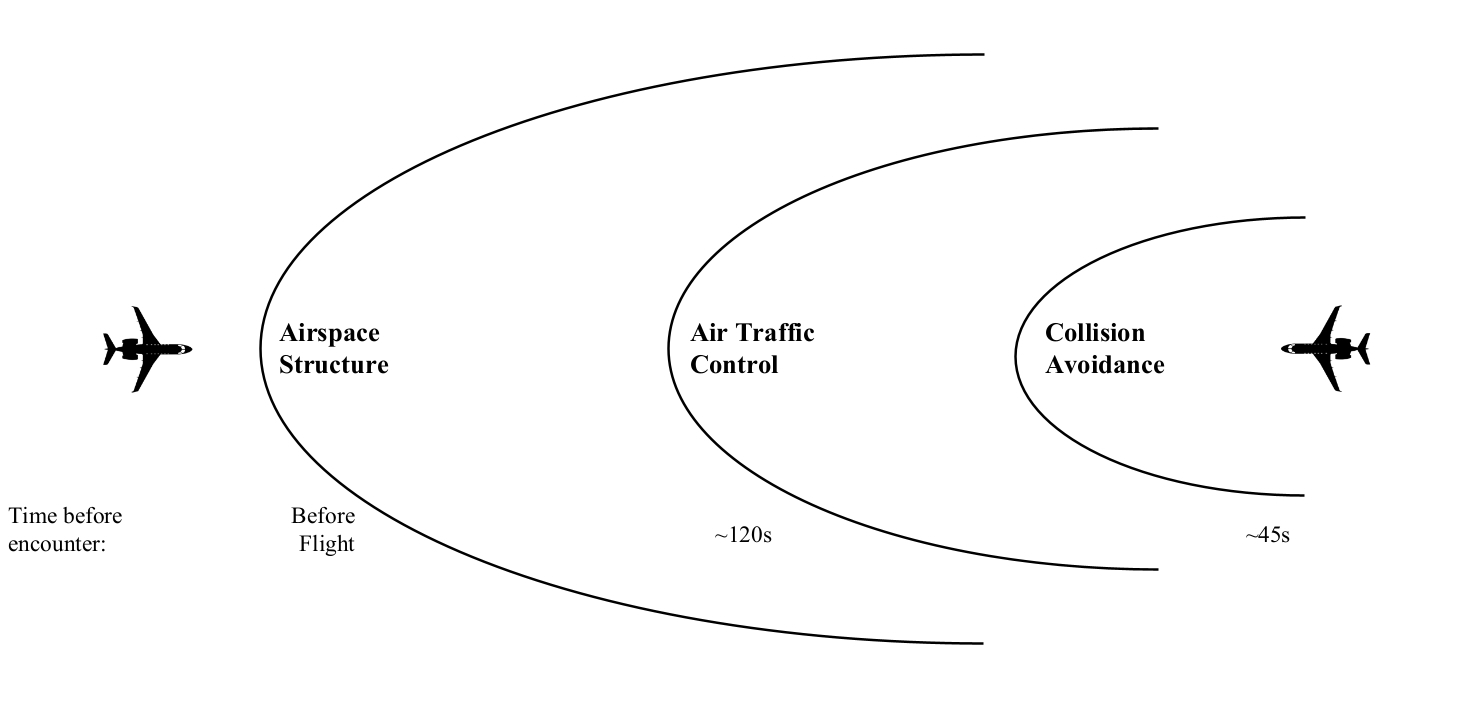
ADS-B In is not itself a collision avoidance tool; it is the complement to ADS-B “Out” technology, which broadcasts precise aircraft location and altitude information and is currently required in most U.S. airspace. Basic ADS-B In applications — such as those that take ADS-B Out signals and display them as traffic either on a tablet or an in-aircraft display — can meaningfully assist with situational awareness and traffic identification, but lack alerts that instruct a pilot how to respond to a conflict. The ROTOR Act seeks to extend an ADS-B In mandate for most civil and military aircraft, requiring installation on significantly more models than the ALERT bill.
To advance collision avoidance technology, the NTSB recommended that ACAS X be installed on all aircraft that currently have TCAS as well as rotorcraft operating in class B airspace, something the ALERT Act would partially implement. (Most helicopters are not equipped with TCAS.)
ACAS X — which requires ADS-B In for certification and installation — is a family of collision avoidance systems designed to increase safety by reducing the nuisance alerts seen with TCAS for aircraft that don’t represent a threat, and which has variants for different types of aircraft including helicopters. NTSB investigators showed last year that if the Black Hawk helicopter involved in the January 2025 midair collision had been equipped with ACAS X, the pilots would have received a traffic alert 73 seconds before impact with the CRJ700 regional jet — plenty of time in which to maneuver to avoid it.
The ABCs of TCAS
Aircraft today can have any of several location tracking and traffic awareness systems, often referred to as “surveillance” technology. Mode C transponders are generally ubiquitous and assist air traffic control in aircraft identification by broadcasting basic altitude information as well as a unique ATC-assigned beacon code through crude radio signals. Though ADS-B Out systems can often be integrated into a transponder for ease of use, they currently do not serve as a replacement, instead augmenting this information-sharing protocol.
TCAS systems use outgoing signals from a transponder, known as “interrogations,” to search for potential threats. When interrogations encounter an intruder aircraft, that aircraft’s transponder responds with its pressure altitude, which is used to determine how far away the intruder is and at what rate it may be approaching or diverging. That process happens once per second.
Today’s TCAS systems largely rely on the same fundamental principles as those developed in the 1980s. They feed information from each interrogation into fixed, rules-based logic, determining how and when to alert flight crews to an impending conflict by asking three questions: Is there a hazard? If so, should the pilot climb or descend to avoid it? And at what rate should that maneuver occur?

If a conflict exists but no action is required, an aural and visual traffic alert (TA) is issued. If the system determines that traffic could cause a collision, an action-oriented resolution alert (RA) instructs the crew to climb or descend to avoid it. When both aircraft are equipped with TCAS, the system can coordinate RAs to avoid a secondary conflict caused by the evasive maneuvers.
The functionality of TCAS is limited and compliance with RAs is far from universal. The system only provides alerts in the vertical dimension and data shows that it sometimes provides faulty nuisance alerts that, over time, can degrade a pilot’s trust in the credibility of the system. The FAA said last year that 65 percent of pilots comply with climb RAs and 70 percent comply with descend RAs, and those numbers drop significantly as the aircraft gets closer to the ground.
Enter ACAS X
Amid the widespread deployment of ADS-B technology in the late 2000s, ACAS X was created to advance the logic around collision avoidance, reduce nuisance alerts and expand the types of operations where the technology can be used.
Instead of using the rules-based logic of TCAS, ACAS X uses on-aircraft databases developed with machine learning to constantly calculate the safety risk of issuing a TA or RA. It then selects the least “costly” course of action in the event of a threat. Unlike TCAS, it takes into account the possibility the intruder aircraft could change its altitude at any time and drastically improves alert reliability using information supplied by ADS-B In: latitude, longitude, bearing, aircraft type and more precise altitude data.
ACAS X systems on airplanes have been shown to reduce the number of nuisance alerts by 65 percent while decreasing the risk of a midair collision by 20 percent. While there isn’t a definitive answer as to why compliance with existing TCAS RAs isn’t higher, studies have indicated that fewer nuisance alerts increase a pilot’s tendency to react when an RA is triggered.
Unlike TCAS, ACAS X exists in several variants for different applications: ACAS Xa for fixed wing aircraft, ACAS Xr for helicopters, ACAS Xu for large uncrewed aerial systems (UAS), and ACAS Xo for specific operations such as closely spaced parallel approaches, among others.
The FAA approved a technical standard order (TSO) for ACAS Xa and ACAS Xo in 2020 and in 2022 stopped accepting certification applications for new TCAS systems to phase in the new technology. On March 2, the FAA formally released TSOs enabling the certification of ACAS Xu equipment, and industry consensus standards for ACAS Xr are expected to be completed later this year.
Inhibiting factors
The implementation of TCAS has been remarkably beneficial for aviation safety. The January 2025 D.C. crash was the first midair collision involving a U.S. commercial airliner since the Congressional mandate went into effect in 1993.
Yet the environment around airports — the airspace with the highest midair collision risk — is where TCAS is least effective, principally because the system inhibits all RAs below 1,000 feet above the ground. At low altitudes, the system is designed to only provide TAs so as to not inadvertently direct pilots to maneuver away from an aircraft it mistakes for a threat which is actually on a closely-spaced parallel approach or even on the ground.
Despite the technological improvements of ACAS Xa, that system too has been designed with the same inhibit altitudes as TCAS to ensure interoperability for flight crews which have become accustomed to and were trained on the legacy system.
Considering the D.C. midair occurred at about 300 feet above the ground, the NTSB found that TCAS worked as intended within the parameters of its prescribed standards. A TA was issued to the CRJ crew about 19 seconds before impact, but no RA was issued. Like most helicopters, the Black Hawk was not equipped with any collision avoidance system, though the crew was believed to have had ADS-B In traffic displayed on knee-mounted tablets that they were trained not to look at while flying at low altitudes.
Related: Special Report: The night everything at DCA finally went wrong
In the NTSB’s final report on the crash, investigators pointed out that TCAS inhibit altitudes were established decades ago “based on technological limitations available at the time.” In the 1970s and ’80s, transponders could not distinguish between an airborne conflict and an aircraft waiting to takeoff on the ground. The inhibit altitudes were never adjusted despite the advent of more advanced transponders.
The House’s ALERT Act as currently written would direct the FAA to study the feasibility of lowering this inhibit altitude for ACAS Xa in an effort to expand the usefulness of the system in and around airports, something the NTSB recommended after investigating the D.C. midair.
Industry experts at the Board’s investigative hearing in August generally agreed that ACAS Xa may be better able to distinguish a true threat aircraft in low-altitude environments. However, ensuring those aircraft can climb or descend fast enough to execute an RA at lower altitudes, where they are often in complex and more dangerous phases of flight near take-off or landing, could be harder. Altering the inhibit threshold may also complicate pilot training and interoperability of crews on different aircraft that are still equipped with legacy TCAS systems.
The ALERT Act would also direct the FAA to change the traffic alerting standards for ACAS Xa to include “clock position, relative altitude, range and vertical tendency.” This could result in more specific aural alert verbiage, for example “Traffic! One o’clock! Three miles! Low!” instead of today’s “Traffic! Traffic!”
While the bill is far from finalized, this change and any others related to ACAS Xa’s inhibit altitudes or alerting philosophy would initiate a protracted revision to the system’s industry consensus standard. That adds uncertainty to the technology’s commercialization and rollout timeline while leaving open questions that airlines and other airspace users may want answered before Congress moves forward with any sort of mandate.
Collision avoidance systems like ACAS X are also at least one order of magnitude more expensive than systems that just show traffic or provide traffic alerts. They are certified to a higher Design Assurance Level (DAL) due to liability concerns associated with pilots being required to respond to an RA, resulting in a more rigorous and expensive certification process.
Solutions on the horizon
Existing TCAS systems are not particularly useful for helicopters, principally because the altitude inhibiting threshold limits their usefulness in the low-altitude regimes where most rotorcraft operate.
Additionally, TCAS has “blind spots” directly above and below an aircraft which are not necessarily an issue for a fixed-wing airplane in fast, straight-and-level flight, but could be problematic for rotorcraft maneuvering more unpredictably and at slower airspeeds. Few helicopters can also meet the vertical climb rate required to comply with RAs, rendering the alerts less useful.
A solution for low-altitude collision avoidance may be found in ACAS Xr, the variant designed specifically for helicopters and the newest system going through standards development. In addition to a standard collision avoidance architecture, ACAS Xr includes a distinct, more rigorous detect-and-avoid (DAA) mode that is able to operate uninhibited at lower altitudes by treating the ground as an intruder and taking its position into consideration when issuing alerts.
The DAA mode was primarily designed for uncrewed vertical lift aircraft, including remotely piloted eVTOLs, which cannot rely on an onboard pilot for visual traffic avoidance. Instead, more robust caution-level (TA) alerting is designed to prevent RAs from happening in the first place. (ACAS Xu systems for large UAS applications are also being developed by companies such as Reliable Robotics.)
The Xr variant is also able to issue RAs in the horizontal dimension as well as “blended” RAs that combine vertical and horizontal guidance — key for rotorcraft operating in hover or slow-flight regimes. Though standards for ACAS Xr have yet to be finalized, NASA testing has shown the system is promising for alerting helicopter pilots of impending collisions.
If, when and how the rollout of that technology could happen both for new entrants and in-service aircraft now rests with Congress as it considers the differing intents of the ROTOR Act, which was principally designed around a blanket mandate for ADS-B In technology, and the ALERT Act, which focuses more on other safety recommendations.

The ALERT Act, whose House sponsors have in the past been reluctant to impose costly requirements on their general aviation constituencies, would only mandate the “capability” to receive ADS-B In information for turbine-powered civil aircraft that require ADS-B Out, civil aircraft operating in Class B and C airspace as well as rotorcraft operating in Class B airspace. No military aircraft would be impacted. By contrast, the Senate’s ROTOR Act, which is supported by the NTSB and the families of the DCA accident victims, would mandate ADS-B In equipment for nearly all U.S. civil and military aircraft wherever ADS-B Out is required and directs the FAA to create a “strategic roadmap” for the implementation of ACAS X.
“I feel like we tolerate such ancient stuff in the air transportation system,” Dr. Fabrice Kunzi, president of avionics manufacturer Avidyne and one of the developers of the original ADS-B enabled traffic awareness system, told The Air Current in an interview. Kunzi is advising D.C. crash victims’ family members and testified during the August NTSB hearing.
Kunzi said he supports the safety benefits of ACAS X but pointed out that it and nearly all other modern cockpit alerting technologies require data from ADS-B “In” systems — technology that still isn’t widespread, especially in commercial aviation. He said the ROTOR Act, which failed to pass the House by one vote on Feb. 24, would have raised the “common denominator up to not even the 2020s but like 2000s level of capability,” potentially allowing for a more phased roll-out of ACAS X.
The fate of the ROTOR Act remains unclear as the House is imminently expected to begin moving its ALERT Act through committee. That piece of legislation will eventually need to pass the Senate, but the higher chamber has criticized its lack of specificity around an ADS-B In mandate.
Midair collisions have historically catalyzed advancements in collision avoidance technology. A 1978 midair collision in San Diego that killed 144 people and a 1986 accident in Los Angeles which claimed 82 lives became the catalysts for the original TCAS mandate. A 2002 midair collision in Überlingen, Germany similarly led to significant TCAS technical revisions after 71 people were killed, 52 of whom were children.
Perhaps the 2025 tragedy in D.C. will cement a similar legacy for ACAS X.
Editor’s note: A previous version of this story reported that the ALERT Act would only require ADS-B In capable systems for civil turbine aircraft and rotorcraft in Class B airspace. The act would also require the systems for civil aircraft operating in Class B and C airspaces.
Write to Will Guisbond at will@theaircurrent.com
Subscribe to The Air Current
Our award-winning aerospace reporting combines the highest standards of journalism with the level of technical detail and rigor expected by a sophisticated industry audience.
- Exclusive reporting and analysis on the strategy and technology of flying
- Full access to our archive of industry intelligence
- We respect your time; everything we publish earns your attention